Family Protection Dogs · New Owner Guide

What to Expect From a Family K9 Protection Dog

A trained protection dog isn't just a pet with a resume. Here's what actually changes in your home — from the first week to the years that follow.
July 20269 min readFalcon K9 Protection
Setting Expectations

This Isn't "Bringing Home a Puppy"

Most families who bring home a protection dog have owned pets before, and it's natural to picture the same experience — a few weeks of adjustment, some basic house rules, and life settles in. A trained family K9 is different in one important way: the dog already has real skills, and your job is to learn how to use them correctly, not to build them from scratch.

That means the first few weeks look less like "puppy-proofing the house" and more like onboarding into a working partnership. You're not just adopting a dog — you're inheriting a set of commands, cues, and a relationship the dog already understands, and you need to step into the handler role convincingly.

Done right, this transition is smooth and genuinely rewarding. Done without guidance, it can leave a well-trained dog confused about who's actually in charge. This guide walks through exactly what to expect at every stage.

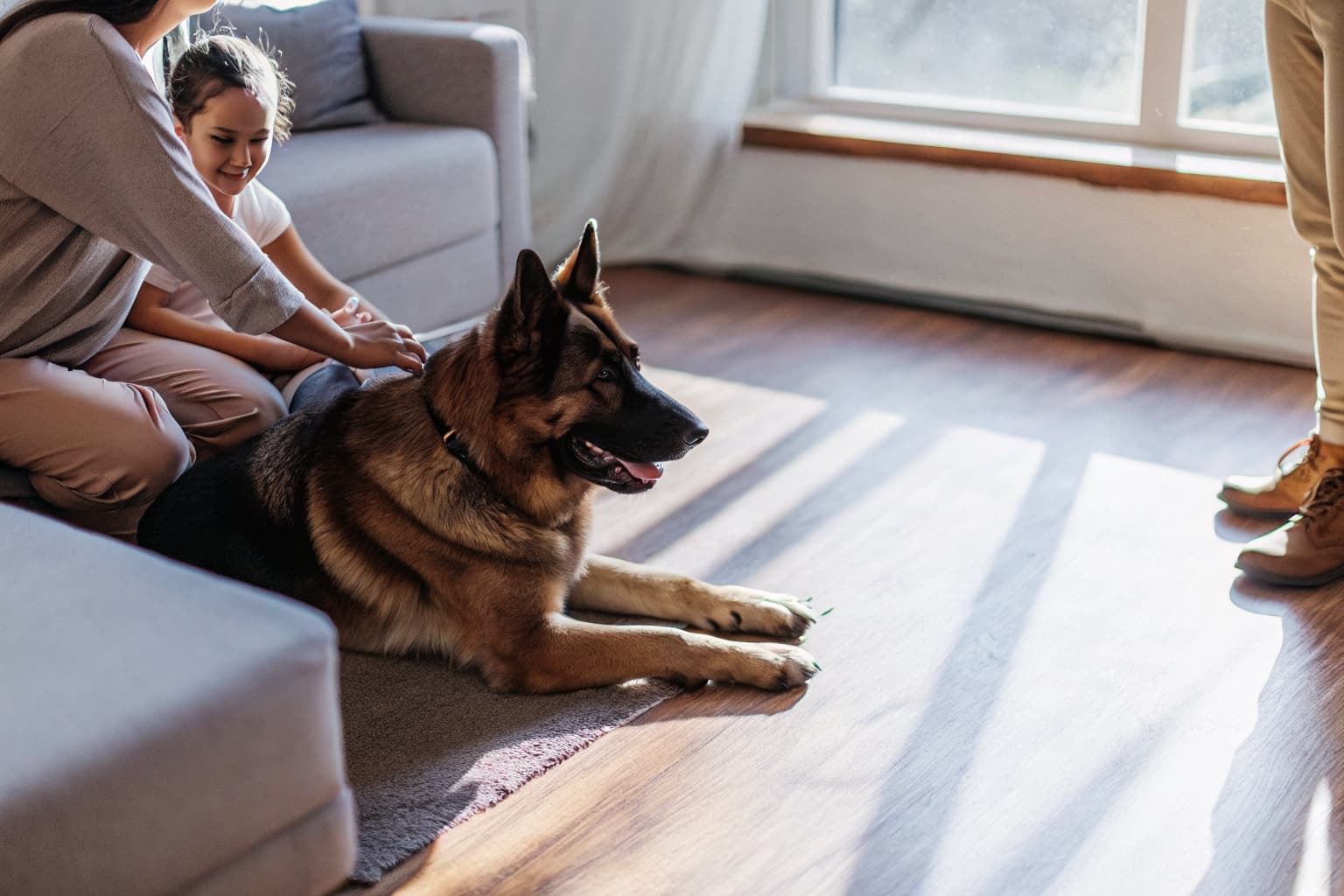
Family German Shepherd protection dog resting calmly in a bright living room while a young girl pets it and her parents look on
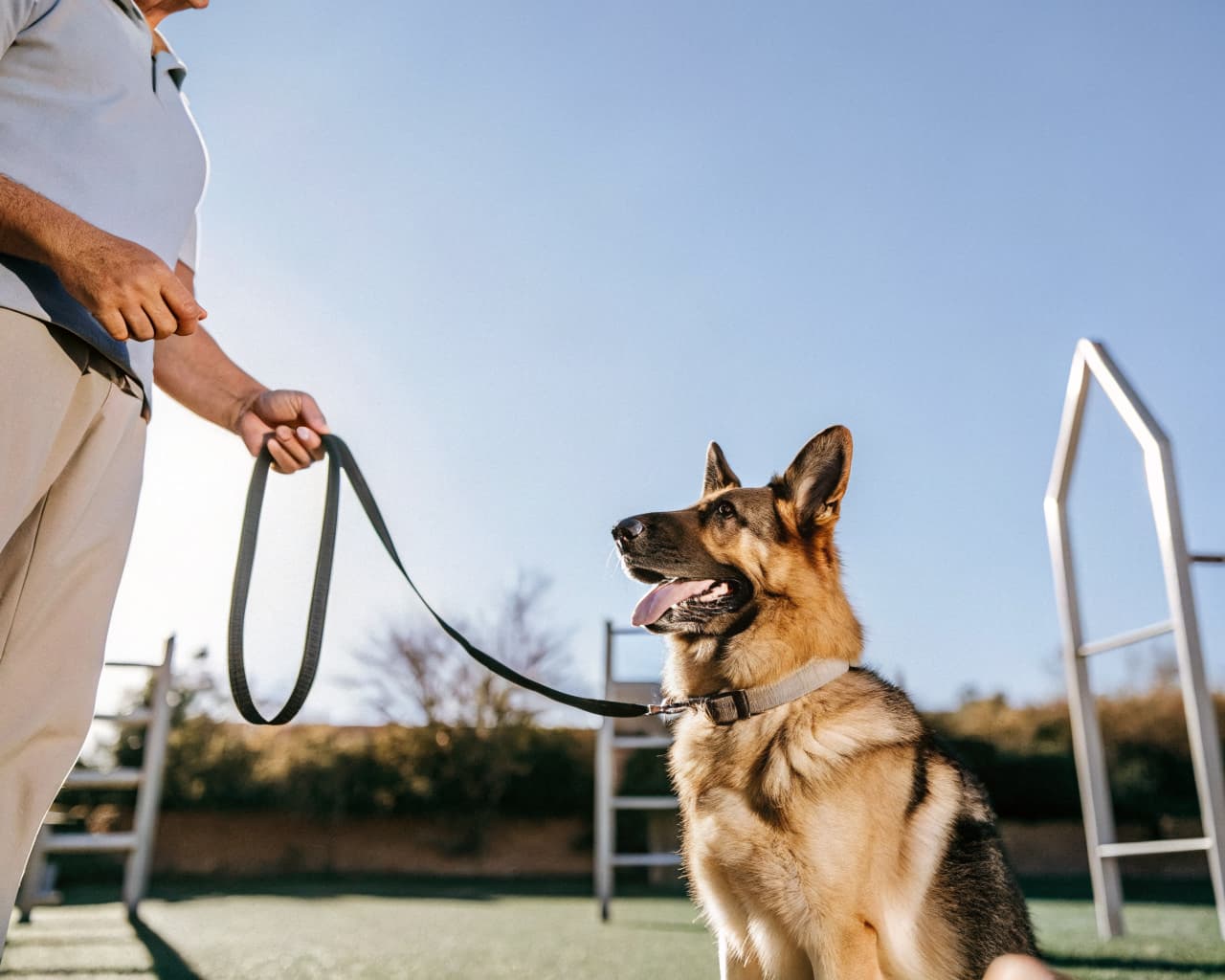
Trainer working with a focused German Shepherd protection dog on leash during an outdoor obedience session
The First Two Weeks

Handover, Bonding, and the Transfer of Trust

A proper placement includes a hands-on handover — not just dropping off a leash and a folder of paperwork. Expect to spend real time with your trainer, walking through every command the dog knows, practicing them yourself, and learning the specific tone, timing, and body language the dog responds to.

For the first several days, the dog is watching you closely — reading your consistency, your confidence, and your follow-through. Dogs don't transfer loyalty on day one just because they've moved into a new house. That trust is built through repetition: the same commands, the same rules, the same consequences, every single time.

It's common for a new dog to test boundaries slightly during this window — not out of defiance, but because it's figuring out whether the new household will hold the same standards as its training did. Families who stay consistent through this period see the fastest, smoothest bonding.

Daily Life

What Living With a Protection Dog Actually Looks Like

Not what movies show you — what actually happens day to day in a family home.

01

A Calm, Present Companion

Most of the day, your dog is simply a dog — napping near the family, following you room to room, enjoying walks and play. A well-trained protection dog is not on edge; it is relaxed by design.

02

Ongoing Maintenance Work

Training skills fade without practice. Expect to run short daily obedience refreshers and periodic check-ins with your trainer to keep commands sharp and the dog mentally engaged.

03

A Confident Home Presence

Visitors, deliveries, and everyday noise are handled with composure, not alarm barking. The dog assesses before reacting — and that composure is exactly what makes it reliable when it matters.
Structure & Rules

Why Every Family Member Needs the Same Playbook

A protection dog reads the entire household, not just its primary handler. If one family member allows behavior that another corrects, the dog receives mixed signals — and mixed signals are where inconsistency creeps in over time. Before the dog arrives, we walk every household member through the same commands and the same expectations.

Children can absolutely be part of this — in age-appropriate ways. Younger kids learn simple rules like not disturbing the dog during a command or while eating. Older kids and teens can be taught basic obedience cues themselves, which builds a genuine working relationship of their own with the dog.

Structure isn't about being rigid — it's what allows the dog to relax. A dog that knows exactly what's expected of it, and that those expectations don't shift from person to person, is a calmer, more predictable companion.

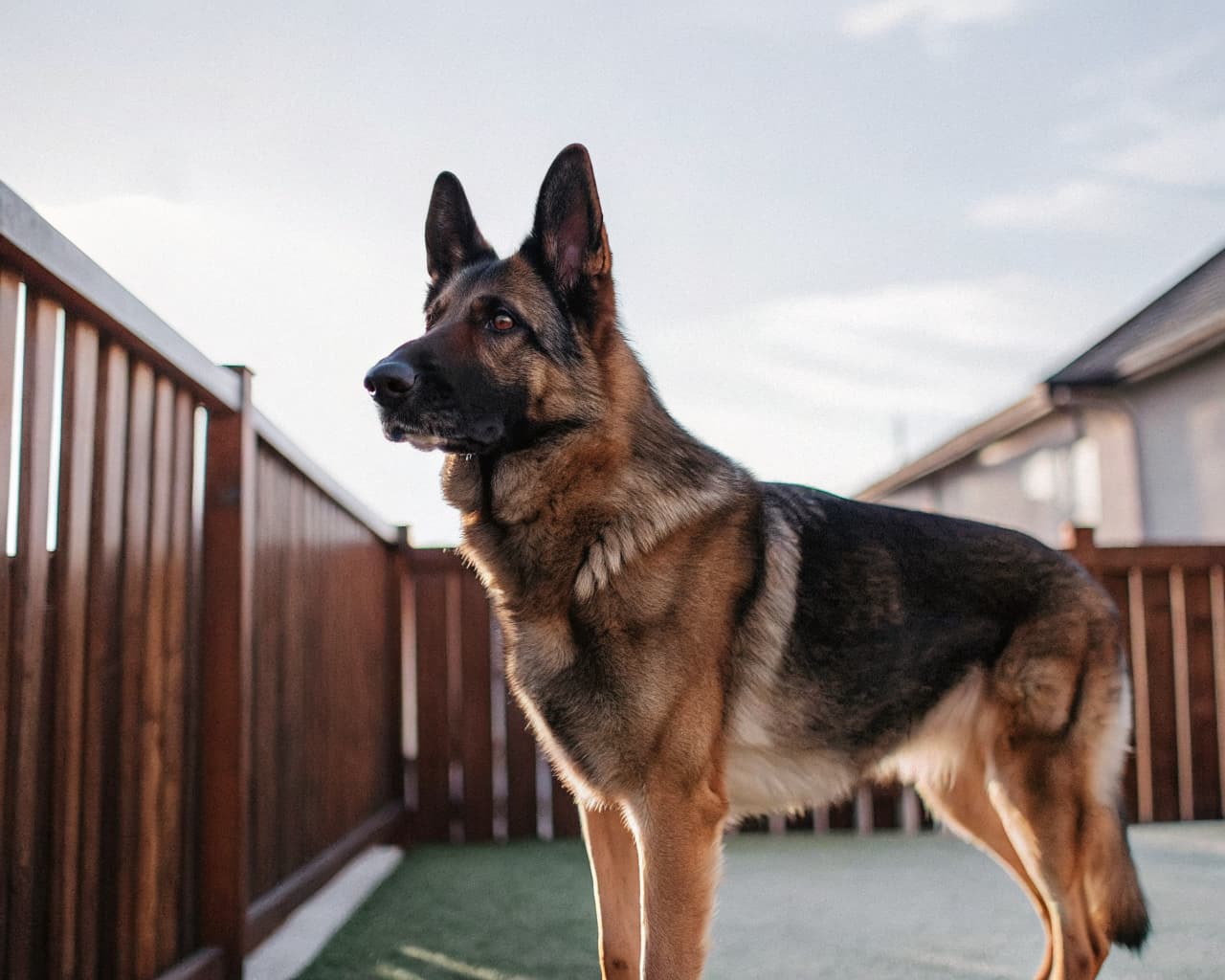
Confident German Shepherd protection dog standing alert in a suburban backyard near a wooden fence
Common Misconceptions

What You Should NOT Expect

A properly trained protection dog does not behave the way TV and movies suggest.

A dog that growls at every stranger or guest.

Reliable neutrality is the goal. Guests and visitors should be met with calm observation, not tension.

A dog that needs constant intense supervision.

A trained protection dog is far easier to live with day-to-day than an untrained dog of the same drive level.

A "finished" dog that never needs more training.

Skills are maintained, not permanent. Periodic refreshers keep the dog sharp for years.

A dog that is unsafe around children.

Properly selected and trained family guardians are chosen specifically for their patience and stability around kids.

The Bottom Line

A family K9 protection dog asks more of you than a typical pet — consistency, structure, and ongoing engagement — and gives back a companion that is genuinely calmer, more predictable, and more capable than most people expect. The transition is smooth when it's guided properly from day one.

TagsFamily Protection DogK9 OwnershipGerman ShepherdDog TrainingNew Owner GuideFamily SafetyProtection Dogs
Ready to Bring Home a Family Guardian?

Talk to a Professional About What Comes Next

At Falcon K9 Protection, every placement includes a full handover and ongoing support, so you know exactly what to expect from day one. Schedule a free consultation to discuss your family's needs.