Service Area:
We provide our services for all 50 states
Phone Number
(561) 921-7232
Email
info@falconk9protection.com
Service Area:
We provide our services for all 50 states
Phone Number
(561) 921-7232
Email
info@falconk9protection.com

TL;DR: Professionally trained family protection dogs cost $30,000–$150,000 depending on breed and training level, with German Shepherds ($50,000–$250,000 for elite training) and Belgian Malinois ($75,000–$200,000) leading the market. For more details, see What To Look For When Buying German Shepherd Dogs . German Shepherds offer the best balance of family temperament and protection capability for most households. Expect 18–24 months of professional training, annual maintenance costs of $2,000–$5,000, and mandatory liability insurance. Local certified trainers provide facility visits and integration support that out-of-state purchases cannot match. This guide explores best protection dogs for families and provides actionable insights.
You're reading this because you want more than a home security system—you need a trained companion that can protect your family while integrating safely into daily life. Family protection dogs differ fundamentally from guard dogs. Guard dogs bark and intimidate. Protection dogs assess threats, respond to commands, and engage only when necessary.
According to Israelprotectionk9, professional training programs span "18 to 24 months of daily, structured training" to develop the discernment required for family environments. These dogs must demonstrate obedience under distraction, neutrality toward strangers in public settings, and controlled protection responses when commanded.
Three core certifications verify legitimate training:
Family temperament requirements extend beyond protection capability. Dogs must tolerate children's unpredictable movements, remain calm during household chaos, and distinguish between normal visitors and actual threats. Allianceprotectiondogs notes their "detailed process typically spans 6 to 12 months—beginning with foundational obedience, advancing through scenario-based protection work, and finally ensuring off‑leash reliability."
The distinction matters for liability and insurance. Homeowners policies often exclude "guard dog" coverage, while protection dogs with documented training and certifications qualify for specialized umbrella policies.
Key Takeaway: Family protection dogs require 18–24 months professional training with PSA PDC, IPO, or AKC certifications. They assess threats and respond to commands rather than reacting with automatic aggression like guard dogs.
Breed selection determines training success, exercise requirements, and family compatibility. Understanding best protection dogs for families near me is key for making informed decisions. Five breeds dominate the protection dog market, each with distinct trade-offs for family environments.
| Breed | Child-Friendliness | Space Requirements | Training Timeline | Typical Cost |
|---|---|---|---|---|
| German Shepherd | Excellent (stable temperament) | 1,500+ sq ft + yard | 12–18 months | $50,000–$250,000 |
| Belgian Malinois | Moderate (experienced handlers) | 2,000+ sq ft + yard | 18–24 months | $75,000–$200,000 |
| Doberman | Good (urban-friendly) | 1,200+ sq ft | 12–16 months | $45,000–$150,000 |
| Giant Schnauzer | Good (hypoallergenic) | 1,500+ sq ft + yard | 14–18 months | $40,000–$120,000 |
| Cane Corso | Moderate (early socialization critical) | 1,800+ sq ft + yard | 16–20 months | $55,000–$180,000 |
German Shepherds account for the majority of family protection placements due to their balance of trainability and stable temperament. Fullcontactk9 notes the breed "was originally bred in the late 1800s" specifically for working alongside humans, creating generations of selective breeding for biddability.
According to Scottsk9, "Well-trained protection dogs have been purchased for up to $230,000," with German Shepherds representing the premium end of this range when sourced from champion European bloodlines. The breed's moderate size (60–90 lbs) fits most family homes without overwhelming smaller children.
Space requirements are manageable: 1,500+ square feet indoors with a securely fenced yard. Exercise needs average 90–120 minutes daily, split between structured training and free play. German Shepherds adapt to suburban environments better than high-drive Malinois while maintaining strong protection instincts.
For families seeking elite European bloodlines with proven working ability, Falcon K9 Protection specializes in imported German Shepherds that combine family temperament with professional protection training. Their dogs undergo extensive socialization protocols to ensure safe integration with children while maintaining protective capabilities.
Belgian Malinois deliver exceptional protection capability but demand experienced handlers. Fullcontactk9 reports these dogs "can reach an explosive top speed of 35 miles per hour (over short distances) and jump more than 8 feet into the air" with proper training.
According to Vanguardprotectiondogs, "A fully trained Belgian Malinois will cost between $75,000 and $200,000" due to the intensive training required to channel their drive appropriately. The breed's energy level requires 2+ hours daily exercise minimum, making them unsuitable for families without significant time commitment.
Space requirements exceed German Shepherds: 2,000+ square feet indoors with 3,500+ square feet of fenced outdoor area. Fencing must be 6–8 feet high—Malinois routinely clear standard 6-foot barriers. Mental stimulation through agility equipment or training exercises is as critical as physical space.
First-time protection dog buyers should avoid Malinois. The breed's intensity can overwhelm families unprepared for their exercise demands and training maintenance requirements.
Dobermans offer strong protection instincts with lower exercise requirements than Malinois, making them viable for urban families. The breed's sleek build (60–90 lbs, 24–28 inches) fits apartments and townhomes better than bulkier German Shepherds.
Exercise needs average 60–90 minutes daily versus 2+ hours for Malinois. This makes Dobermans practical for working families who cannot dedicate extensive time to physical conditioning. Their short coat requires minimal grooming but necessitates climate considerations—Dobermans need indoor accommodations in extreme cold.
Training timelines run 12–16 months for full protection certification. The breed's intelligence accelerates obedience training, though their sensitivity requires positive reinforcement methods rather than harsh corrections. Dobermans bond intensely with families, making them naturally protective without excessive territorial behavior.
Key Takeaway: German Shepherds ($50,000–$250,000) offer the best family temperament for most buyers. Belgian Malinois ($75,000–$200,000) require experienced handlers and 2+ hours daily exercise. Dobermans suit urban families needing lower exercise commitment.

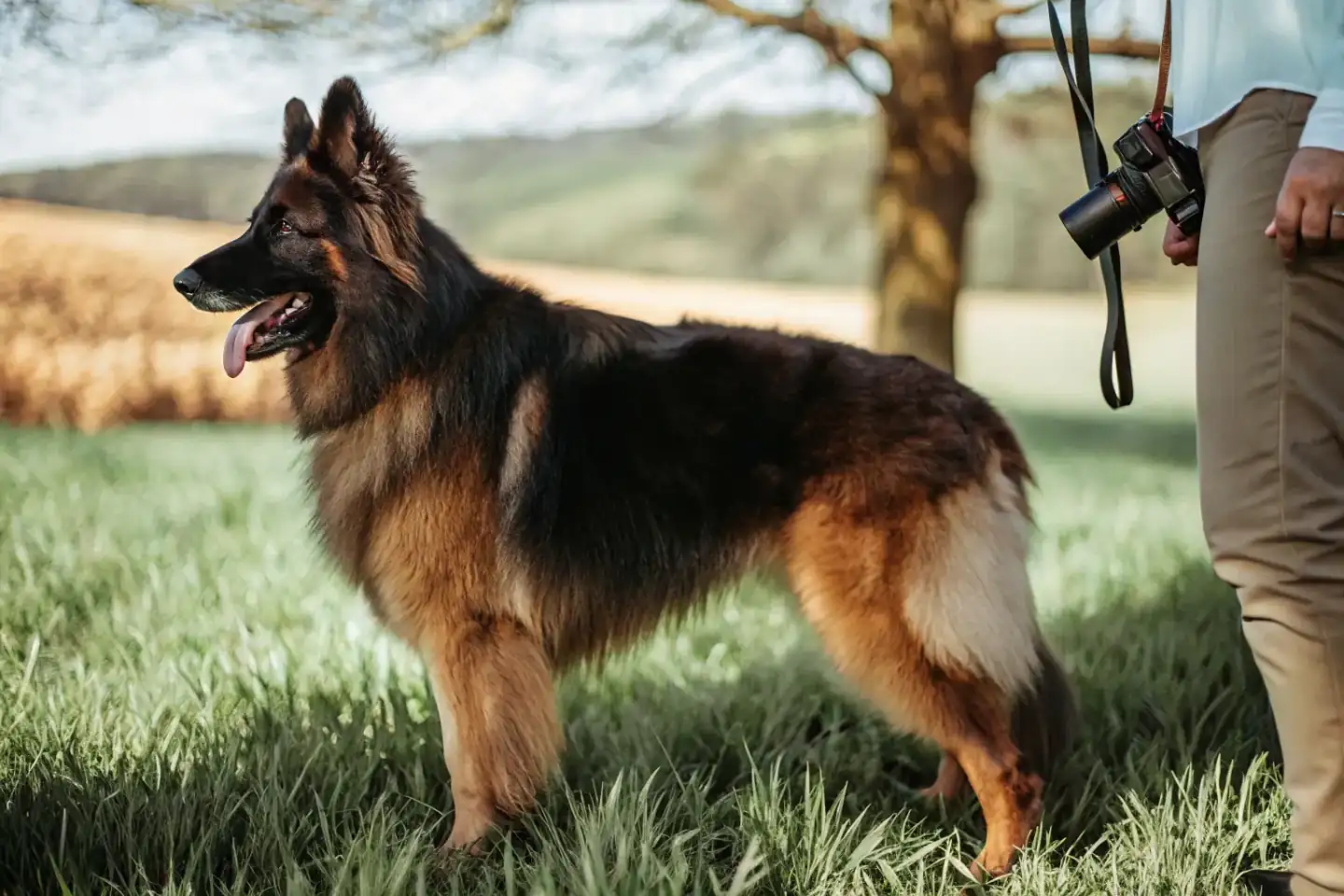
A professional trainer works with a Belgian Malinois during an outdoor protection training session.
Protection dog pricing reflects training investment, breeding quality, and certification level. For more details, see Protection Family German Shepherd Dogs For Sale In. Understanding the cost structure prevents sticker shock and helps budget for total ownership expenses.
Basic Protection Dogs ($30,000–$50,000):
Entry-level dogs complete foundational obedience and basic protection scenarios. Allianceprotectiondogs notes "Entry-level puppies with basic obedience may start around $30,000–$50,000." These dogs demonstrate reliable obedience, public socialization, and protection responses to direct threats but lack advanced scenario training.
Training includes:
Advanced Protection Dogs ($50,000–$150,000):
Mid-tier dogs receive extensive scenario training and environmental proofing. According to, "Fully trained adult protection dogs commonly fall between $50,000 and $150,000, sometimes higher for elite programs."
Additional capabilities include:
Elite Protection Dogs ($150,000–$250,000+):
Premium dogs combine champion bloodlines with specialized training for high-net-worth individuals. Scottsk9 reports "The cost of a highly skilled protection dog can vary, but generally, they are $150,000 and can go much higher."
Elite training adds:
Ongoing Annual Costs ($2,000–$5,000):
Purchase price represents only initial investment. estimates "annually, you might spend $2K–$5K on maintenance—including food, vet visits, and occasional training refreshers."
Monthly breakdown averages $300 with these specific categories:
First-Year Total Example:
A mid-tier German Shepherd illustrates complete costs:
Financing Options:
Many trainers offer payment plans to spread costs over 12–24 months. Typical terms include 15–20% down payment with 8–12% APR for qualified buyers. A $60,000 dog with 20% down ($12,000) financed over 24 months at 8% APR totals approximately $51,960 with monthly payments around $2,165.
Cost Comparison to Alternatives:
Home security systems cost $540–$720 annually for professional monitoring. Protection dogs cost 4–8x more in ongoing expenses but provide companionship and mobile security that systems cannot match. The decision hinges on whether you value the dual-purpose nature of a trained dog versus purely technological security.
Key Takeaway: Budget $30,000–$50,000 for basic protection dogs, $50,000–$150,000 for advanced training, and $150,000+ for elite executive protection dogs. First-year costs total $79,000+ including purchase and setup, then $2,000–$5,000 annually ($300/month average) for maintenance.
Locating qualified trainers requires verification beyond marketing claims. When considering best protection dogs for, several factors come into play. The protection dog industry lacks universal regulation, making due diligence critical to avoid scams and undertrained dogs.
5-Step Verification Checklist:
Confirm certifications: Legitimate trainers hold current PSA PDC, IPO3/IGP3, or AKC advanced obedience certifications. Request certification numbers and verify directly with issuing organizations. Trainers who refuse to provide verifiable credentials should be eliminated immediately.
Review training videos: Demand unedited footage showing dogs performing protection scenarios with multiple unfamiliar decoys. Single-decoy videos indicate dogs trained to respond only to their primary trainer. Look for videos demonstrating obedience under distraction, public neutrality, and controlled bite work.
Inspect facilities: Visit training compounds in person. Clean kennels (80+ square feet per dog), varied training equipment (bite sleeves, decoy suits, agility obstacles), and multiple dogs in different training stages indicate professional operations. Trainers who refuse facility visits are immediate red flags.
Verify health certifications: All dogs should have OFA (Orthopedic Foundation for Animals) hip and elbow certifications to screen for dysplasia. Request health certificates dated within 30 days of delivery, rabies vaccination records, and genetic health testing results.
Contact client references: Speak with 3+ previous buyers about their experience. Ask specific questions about integration challenges, trainer responsiveness post-delivery, and whether the dog's capabilities matched promises. Trainers who cannot provide verifiable references should be avoided.
Required Certifications Explained:
PSA PDC: Tests dogs with unfamiliar decoys to prevent "single-handler" training failures. Certification requires passing obedience, environmental, and protection scenarios with judges the dog has never worked with.
IPO/IGP: Sport-focused certification validating bite work, tracking, and obedience. While valuable, IPO alone doesn't guarantee family-appropriate temperament—dogs need additional socialization testing.
AKC CGC: Baseline public behavior certification. Protection dogs should hold CGC Advanced or Urban certifications demonstrating reliability in crowded, distracting environments.
Red Flags to Avoid:
Watch for these scam indicators:
Questions to Ask Before Deposit:
Regional Trainer Networks:
Start your search with verified directories:
Local trainers offer significant advantages over out-of-state purchases: facility visits, meeting dogs before final decisions, and easier follow-up training sessions. Out-of-state purchases provide wider selection but require relying on videos, add $500–$1,500 transport costs, and limit recourse if issues arise.
For families in areas with limited local options, Falcon K9 Protection provides nationwide delivery with comprehensive integration support. Their transparent training protocols and facility access demonstrate the verification standards buyers should demand from any trainer.
Key Takeaway: Verify trainers hold PSA PDC, IPO3, or AKC certifications with facility visits and multi-decoy training videos. Red flags include dogs under 18 months sold as "fully trained," no health certifications, and refusal to provide client references.
Training standards separate professionally prepared dogs from undertrained animals marketed as "protection dogs." Understanding required capabilities helps evaluate whether a dog meets family safety needs.
Obedience Foundation Requirements:
All protection dogs must demonstrate rock-solid obedience before protection training begins. This foundation typically requires 3–6 months of daily training:
Dogs lacking this foundation cannot be trusted to respond during high-stress protection scenarios. A dog that won't reliably recall off-leash cannot be safely deployed for family protection.
Protection Scenario Testing:
Legitimate protection training includes scenario-based testing with unfamiliar decoys. Dogs must demonstrate:
Child Interaction Certification:
Family dogs require specific testing around children's unpredictable behavior:
Dogs without child-specific socialization may misinterpret normal play as threats requiring intervention. This creates liability risks and potential injury to children.
Public Socialization Proof:
Protection dogs must remain neutral in public environments:
AKC Canine Good Citizen certification provides baseline verification of public behavior. Advanced protection dogs should hold CGC Urban or CGC Advanced certifications demonstrating reliability in complex environments.
Delivery Process and Integration Period:
Professional trainers provide structured handoff protocols. includes follow-up sessions "at 2 weeks, 6 weeks, and 3 months post-delivery" to ensure successful integration.
First-week protocol requires:
Full integration takes 60–90 days as the dog bonds with family members and learns household routines. Rushing this process increases stress behaviors and return rates.
Key Takeaway: Protection dogs need 6–12 months training including off-leash obedience, scenario-based protection work with unfamiliar decoys, child interaction certification, and public socialization proof. Expect 60–90 day integration period with professional follow-up.
Protection dog ownership requires realistic assessment of your family's readiness. For more details, see Best Protection Dogs For Families Near Me. These five questions identify potential deal-breakers before making a $30,000–$150,000 investment.
1. Can You Commit 2+ Hours Daily for Exercise and Training?
Working breeds require substantial time investment beyond basic walks. This directly relates to best protection dogs for in practical terms. German Shepherds need 90–120 minutes daily. Belgian Malinois demand 2+ hours minimum. This time cannot be delegated to dog walkers—protection dogs need handler engagement to maintain bond and training.
Calculate honestly: Can you provide this time every single day for the next 8–10 years? Approximately 40% of protection dog returns occur because families underestimated exercise requirements. A $50,000 dog returned after 3 months represents catastrophic financial loss.
2. Do You Have $40,000+ First-Year Budget?
First-year costs exceed purchase price:
A $50,000 dog costs approximately $52,000–$54,000 in year one. Can your budget absorb this without financial stress? Protection dogs are luxury purchases—if the cost creates hardship, reconsider.
3. Is Your Household Stable for 12+ Months?
Major life changes disrupt integration:
Dogs need consistent routines and environments during the first 90 days. Disruptions during this period increase stress behaviors and training regression. If significant changes are planned within 12 months, delay your purchase.
4. What Are Your State's Legal Requirements?
Twenty-three states have municipalities with breed-specific legislation affecting German Shepherds, Dobermans, and other protection breeds. Restrictions range from special permits to outright bans.
Research requirements:
Verify compliance before deposit. Discovering restrictions after purchase forces difficult choices between your dog and your housing.
5. What Return/Guarantee Policies Does the Trainer Offer?
Reputable trainers provide:
Trainers refusing these protections lack confidence in their dogs or training. The 30-day evaluation period is critical—it allows families to assess whether the dog integrates successfully before commitment becomes permanent.
Key Takeaway: Assess honestly: 2+ hours daily time commitment, $40,000+ first-year budget, household stability for 12+ months, compliance with local breed laws, and trainer guarantees including 30-day refund and lifetime support.
Finding qualified trainers near you requires verification of credentials, facility standards, and client outcomes. While national trainers offer wider selection, local options provide facility visits and easier integration support.
For families seeking professionally trained protection dogs with proven European bloodlines, Falcon K9 Protection offers several advantages:
Their approach demonstrates the standards buyers should demand: verifiable certifications, health guarantees, facility transparency, and long-term support commitment. Whether you choose Falcon K9 Protection or another trainer, these criteria separate professional operations from undertrained dogs marketed as "protection dogs."
When evaluating any trainer:
Local trainers provide advantages for first-time buyers: meeting dogs before final decisions, observing training methods firsthand, and easier access for follow-up sessions. Out-of-state purchases work for experienced buyers who know exactly what they want, but first-time families benefit significantly from local relationships.
Direct Answer: Trained family protection dogs cost $30,000–$150,000 depending on breed, training level, and bloodline quality, with ongoing annual expenses of $2,000–$5,000 - learn more at Why Imported German Shepherds Are The Best Choice .
According to, "Entry-level puppies with basic obedience may start around $30,000–$50,000" while "Fully trained adult protection dogs commonly fall between $50,000 and $150,000, sometimes higher for elite programs." Israelprotectionk9 breaks this into tiers: "Foundation-Trained Dogs ($25,000–$45,000), Family Protection Dogs ($45,000–$75,000), Executive or Elite Protection Dogs ($75,000 and up)."
Direct Answer: German Shepherds offer the best combination of stable temperament, trainability, and protection capability for families with young children.
German Shepherds consistently receive top recommendations due to their natural protectiveness combined with biddability around children when properly socialized. The breed's moderate size (60–90 lbs) is manageable for most families without overwhelming smaller children. Belgian Malinois, while highly capable, require experienced handlers and extensive exercise that most families with young children cannot provide. Dobermans work well for urban families but lack the German Shepherd's proven track record with children across diverse family situations.
Direct Answer: Professional protection dog training requires 18–24 months from puppy selection through full certification and delivery.
specifies "18 to 24 months of daily, structured training" to develop reliable protection responses and family-appropriate temperament. This timeline includes 3–6 months foundational obedience, 2–4 months public socialization, and 6–12 months scenario-based protection work. Dogs starting training as adults (18+ months) can complete programs in 12–16 months, but puppies require the full 18–24 month timeline for physical maturity and comprehensive training.
Direct Answer: Professionally trained protection dogs are safe around children when properly socialized and integrated, but require supervised interaction during the first 30 days.
Protection dogs receive specific child interaction training including tolerance of grabbing, pulling, and high-pitched screaming. However, safety requires following integration protocols: no unsupervised interaction with children under 8 for the first 30 days, supervised play with trainer-provided protocols (no roughhousing), and gradual introduction of children to the dog's routines. Dogs without child-specific certification should not be placed in homes with young children regardless of breed or protection training level.
Direct Answer: Yes, but availability varies significantly by region, with major metropolitan areas offering more local options than rural locations.
Start your search with verified trainer directories: NAPDT filtered by "protection sports," PSA member lists, and local IPO/IGP clubs. Major cities typically have 2–5 qualified trainers within 100 miles. Rural areas may require out-of-state purchases with professional transport ($500–$1,500 ground transport, $2,000–$4,000 flight nanny services). Local trainers provide facility visits and easier follow-up training, making them preferable for first-time buyers despite potentially limited selection.
Direct Answer: Protection dogs should hold PSA PDC (Protection Dog Certification), IPO3/IGP3 titles, or AKC Canine Good Citizen Advanced certifications as minimum standards.
PSA PDC tests dogs with unfamiliar decoys to verify protection responses aren't limited to their primary trainer. IPO/IGP titles validate bite work, tracking, and obedience but are sport-focused—dogs need additional family socialization testing. AKC CGC Advanced or Urban certifications demonstrate public behavior reliability in crowded, distracting environments. Dogs lacking verifiable certifications from recognized organizations should be avoided regardless of trainer marketing claims.
Direct Answer: Yes, protection dog owners need $1M–$2M umbrella liability policies costing $360–$1,000 annually, as standard homeowners policies often exclude "guard dog" coverage.
According to, "Adequate pet insurance, which can cost anywhere from $360 to $1,000 per year, can help cover unexpected medical costs for your protection dog." Standard homeowners policies frequently exclude liability for dogs trained in protection work. Umbrella policies provide specific protection dog coverage and are required by most reputable trainers before delivery. Verify coverage with your insurance provider before purchase—some carriers refuse coverage for certain breeds or trained protection dogs entirely.
Direct Answer: Verify trainers through facility visits, certification checks with issuing organizations, multi-decoy training videos, health certifications, and client references.
Request certification numbers and verify directly with PSA, AKC, or IPO organizations—legitimate trainers provide this information readily. Demand facility visits to inspect kennels (80+ square feet per dog), training equipment variety, and multiple dogs in training. Review unedited videos showing dogs performing with 3+ unfamiliar decoys. Confirm OFA hip/elbow certifications and health guarantees (minimum 2 years). Contact 3+ previous clients about integration experiences. Trainers refusing any of these verification steps should be eliminated from consideration immediately.
For personalized guidance on this topic, Falcon K9 Protection – Premium German Shepherds & Protection Dogs | Imported Elite Bloodlines - Falcon K9 Protection (https://falconk9protection.com) can help you find the right approach for your situation.
Finding the right family protection dog requires balancing breed selection, trainer verification, and honest assessment of your family's readiness for the time and financial commitment. German Shepherds offer the most reliable combination of family temperament and protection capability for most buyers, though Belgian Malinois and Dobermans serve specific needs for experienced handlers or urban environments.
Expect to invest $30,000–$150,000 for purchase plus $2,000–$5,000 annually for maintenance. Verify trainers through facility visits, certification checks, and client references—the protection dog industry lacks universal regulation, making due diligence critical. Local trainers provide advantages for first-time buyers through facility access and easier integration support.
For families ready to move forward, Falcon K9 Protection demonstrates the transparency and professional standards that separate legitimate trainers from undertrained dogs marketed as protection animals. Whether you choose them or another verified trainer, prioritize certifications, health guarantees, and long-term support over marketing claims. Your family's safety depends on the quality of training and integration support, not just the dog's breed or price tag.
German Shepherds for sale in the USA Imported German Shepherds from Germany German Shepherd import services USA Elite German Shepherd bloodlines European German Shepherd puppies for sale Premium German Shepherds for sale Protection German Shepherds for sale Family protection dogs USA Personal protection dogs for sale Working line German Shepherds USA German Shepherd puppies for sale USA Health certified German Shepherds German Shepherd dog placement services German Shepherd matching service Trained protection dogs USA Executive protection dogs for sale German Shepherd breeders in Germany Authentic German Shepherd imports German Shepherds with pedigree documentation German Shepherds with hip and elbow certification High quality German Shepherds USA German Shepherds for family and protection Top German Shepherd imports USA Imported working dogs for sale German Shepherds available in the United States German Shepherd dogs for sale USA German Shepherd dogs for sale in the US German Shepherd protection dogs for sale Family protection German Shepherd Personal protection dog USA Working line German Shepherd for sale German Shepherd breeder USA German Shepherd puppies imported from Germany Trained German Shepherds for sale USA German Shepherd family companion dog Executive protection dogs USA German Shepherd placement services Temperament tested German Shepherds German Shepherd dogs for sale German Shepherds for sale near me protection German Shepherd for sale family German Shepherd for sale imported German Shepherds for sale German Shepherd puppies for sale working line German Shepherd for sale trained German Shepherd for sale elite German Shepherds for sale German Shepherd import USA import German Shepherd from Germany European German Shepherd for sale German Shepherds from Germany for sale German Shepherd import services health certified imported German Shepherd authentic German Shepherd bloodlines German working line German Shepherd premium European German Shepherd personal protection dog for sale family protection dog for sale trained protection dog USA executive protection dogs protection trained German Shepherd protection dogs for sale USA German Shepherd protection dogs home protection dog for sale guard dog German Shepherd elite protection dog best German Shepherd for families family companion German Shepherd loyal family protection dog German Shepherd for first-time owner stable German Shepherd for home temperament tested German Shepherd safe family guard dog trained family German Shepherd calm German Shepherd for sale German Shepherd family placement sport German Shepherd for sale IGP German Shepherd for sale Schutzhund German Shepherd high drive German Shepherd police line German Shepherd Czech working line German Shepherd Belgian Malinois for sale USA Dutch Shepherd for sale USA elite working dog USA German Shepherds for sale in Florida German Shepherd breeders in the USA premium German Shepherd breeder USA buy German Shepherd USA reserve a German Shepherd German Shepherd available now USA imported dogs available in the US German Shepherd consultation what to look for when buying a German Shepherd why imported German Shepherds cost more how to choose a protection German Shepherd benefits of German Shepherds from Germany how to import a German Shepherd to the USA difference between working line and show line German Shepherd are imported German Shepherds better best German Shepherd for protection and family health certifications for imported dogs lifetime support after buying a German Shepherd