How to Choose a Working Line German Shepherd Nearby (2026)

TL;DR: Finding a quality working line German Shepherd nearby requires evaluating breeders within a 300-500 mile radius, verifying OFA hip/elbow certifications and IGP titles, and matching puppy temperament to your specific needs. Expect to invest $2,500-$3,500 for a titled puppy plus $6,000-$8,000 in first-year costs. Working lines demand experienced handlers committed to 2-3 hours daily exercise and structured training - they're elite working dogs, not casual pets.

What Makes a Working Line German Shepherd Different?

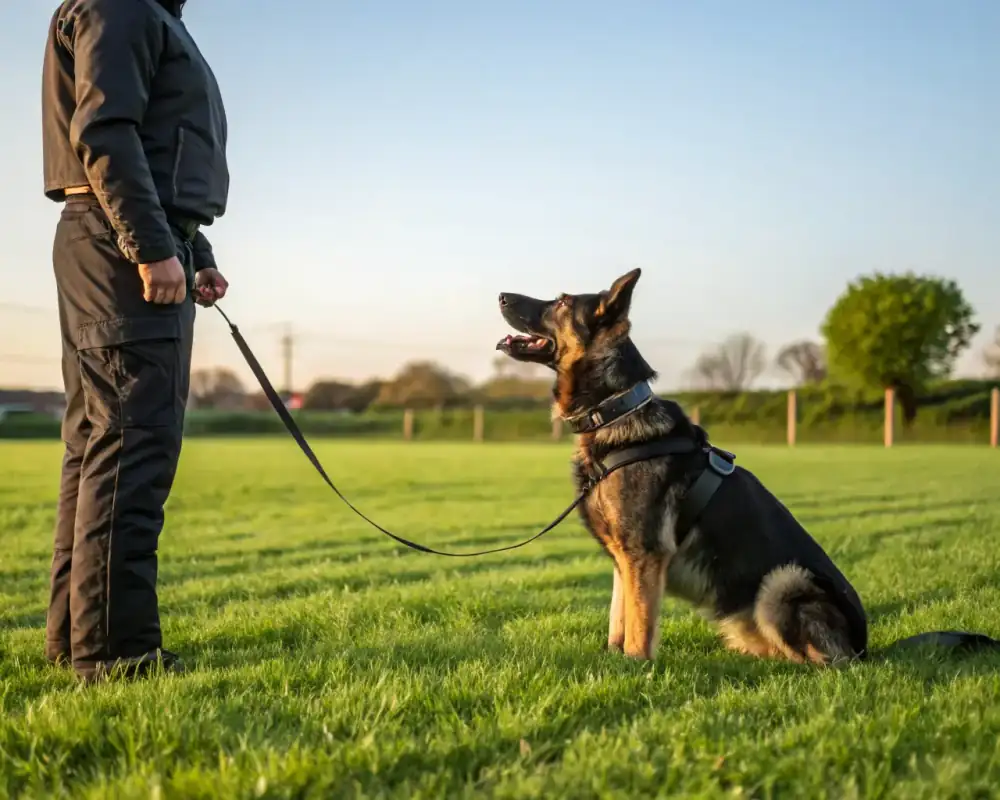
Working line German Shepherds are bred specifically for performance in protection work, police service, sport competition, and detection roles. According to K10workingdogs, these dogs "can be used as single purpose dogs (detection) and dual purpose dogs (detection and patrol work)," reflecting their functional breeding priorities.

The distinction from show lines runs deeper than appearance. While show line German Shepherds are bred for conformation standards and described as with calmer temperaments, working lines exhibit significantly higher drive, energy, and working intensity. emphasizes that "working line German Shepherds are not casual pets. They are elite working dogs that need a purpose, every day."

Structural and temperament differences:

Characteristic Working Line Show Line
Back structure Straighter topline, moderate angulation Sloped back, extreme rear angulation
Build Athletic, muscular, functional Larger frame, elegant appearance
Common colors Sable, black, bi-color Red/black, black/tan
Energy level Very high, requires 2-3 hours daily exercise Moderate, more adaptable
Drive Strong prey and work drive Lower drive, easier to manage
Ideal handler Experienced, committed to training Families, first-time owners

According to K9delta, working line males typically measure "24- and 26-inches tall at the withers and weigh anywhere from 66 to 88 pounds when fully grown," while females are "22- to 24-inches and 49 to 71 pounds." These dogs are built for endurance and agility rather than show ring movement.

The temperament difference matters most for daily life. Working lines need constant mental stimulation and physical outlets. K9delta recommends expecting to "spend at least a couple hours a day working with your dog to expend their energy and teach them manners, tricks, and so much more." Without adequate exercise and training, these dogs develop destructive behaviors and anxiety.

Key Takeaway: Working line German Shepherds are bred for performance, not appearance. They require experienced handlers who can provide 2-3 hours daily exercise, structured training, and a clear job - making them unsuitable for sedentary households or first-time owners.

How Do You Find Reputable Working Line Breeders Near You?

Geographic distribution of quality working line breeders creates a significant challenge for buyers seeking "nearby" options. According to the GSDCA-WDA breeder directory, reputable working line breeders cluster primarily in the Pacific Northwest, Upper Midwest, and Mid-Atlantic regions, with approximately 45 verified member breeders nationwide.

This concentration means most serious buyers must expand their search radius considerably. Community discussions on Reddit's r/germanshepherds reveal that buyers "typically travel 200-600 miles to find the right breeder with appropriate bloodlines and health testing," with several respondents confirming they flew to visit breeders across the country.

Five effective search methods:

  1. Working dog sport clubs: The United Schutzhund Clubs of America (USCA) maintains a directory of 80+ clubs nationwide offering IGP training. Club members actively compete with working line dogs and can provide breeder referrals based on firsthand experience with specific bloodlines.
  2. IGP trial attendance: Attending local trials allows you to observe dogs in action, meet breeders, and evaluate temperament and working ability before committing. Trial calendars are available through USCA and regional clubs.
  3. Breed club directories: The German Shepherd Dog Club of America - Working Dog Association (GSDCA-WDA) maintains a breeder directory with members who agree to health test breeding stock and provide written contracts. Membership signals commitment to working line preservation standards.
  4. Working-dog.com database: The working-dog.com breeder search enables filtering by location, breed lines (DDR, Czech, West German), and recent litter announcements with complete pedigree information. While primarily European breeders, North American listings are growing.
  5. Professional trainer referrals: Local protection dog trainers and IGP instructors work regularly with working line dogs and know which breeders produce stable, trainable puppies versus problematic temperaments.

Geographic radius recommendations:

For buyers in major metropolitan areas with established working dog communities (Seattle, Portland, Chicago, Detroit, Philadelphia), a 150-200 mile radius may yield multiple options. For those in underserved regions (Southeast, Southwest, rural areas), expect to search within 300-500 miles or consider out-of-state breeders.

Red flags in online listings:

  • Continuously available puppies year-round (suggests commercial breeding operation)
  • No mention of health certifications or working titles
  • Refusal to provide facility visits or parent dog information
  • Meeting only at neutral locations instead of breeder facility
  • Prices significantly below market ($1,500-$2,000 range indicates corners being cut)
  • Multiple breeds offered (working line breeders typically specialize)

Initial contact questions:

When you identify potential breeders, ask:

  • What health certifications do parent dogs have? (Request OFA numbers for verification)
  • What working titles have parents earned? (IGP levels, breed surveys)
  • How often do you breed each female? (More than every other heat cycle is concerning)
  • Can I visit your facility and meet parent dogs?
  • What is your puppy selection process and timeline?
  • Do you provide a written contract with health guarantee?

For those seeking elite European bloodlines with proven working ability and stable family temperament, Falcon K9 Protection specializes in imported German Shepherds bred to the highest European standards. Their program combines over 40 years of experience in the German working-dog world, with co-founder Klaus Rempis bringing 35+ years of experience within the prestigious German SV system, producing and training dogs known for their exceptional structure, drive, and reliability. Neal Isanuk focuses on selecting and placing elite protection dogs for families and individuals throughout the United States, ensuring each dog meets the highest standards for temperament, obedience, and family safety.

Key Takeaway: Quality working line breeders are geographically concentrated, requiring most buyers to search within a 300-500 mile radius. Use sport club connections, trial attendance, and verified directories rather than general internet searches to identify reputable programs with health-tested, titled breeding stock.

What Health Tests Should Parents Have?

Health certifications represent the foundation of responsible breeding. According to the Orthopedic Foundation for Animals (OFA), hip dysplasia affects 19.8% of German Shepherds in their database, making pre-breeding screening essential. The OFA grading system rates hips from Excellent to Severe dysplasia, with "Good" or better recommended for breeding working lines due to their physical demands.

Mandatory health certifications checklist:

Hip evaluation (OFA or PennHIP):

  • OFA requires dogs be at least 24 months old for final ratings
  • Acceptable ratings: Excellent (90-100 percentile), Good (70-89 percentile), Fair (50-69 percentile)
  • Borderline, Mild, Moderate, or Severe ratings disqualify dogs from ethical breeding programs
  • provides quantitative measurement (DI <0.3 is tight, >0.7 concerning; breed median ~0.55)

Elbow evaluation (OFA):

  • Normal rating required (Grade 0)
  • Grade I, II, or III dysplasia indicates structural problems
  • Elbow dysplasia causes lameness and arthritis in working dogs

Degenerative Myelopathy (DM) genetic test:

  • According to OFA's DM testing database, "DM is an autosomal recessive disorder. Two copies of the mutated gene (homozygous) are required for a dog to be at risk for developing DM."
  • Test results: Clear (no copies), Carrier (one copy), At Risk (two copies)
  • Ethical breeders avoid At Risk x At Risk pairings that produce 100% affected or carrier offspring
  • Clear x Carrier produces all Clear or Carrier puppies (none At Risk)

Additional recommended tests:

  • Von Willebrand Disease (vWD) genetic test for bleeding disorder
  • Cardiac evaluation (congenital heart defects)
  • Eye examination (CERF certification for hereditary eye diseases)
  • Thyroid panel (hypothyroidism screening)

How Do You Verify Certifications Online?

The OFA advanced search tool allows you to verify any breeder's claims by searching the dog's registered name or AKC number. All certifications are publicly accessible in the database. If a breeder claims OFA certifications but results don't appear in the database, this is a major red flag.

For European imports, check working-dog.com for German breed survey results (Körung) and hip/elbow ratings using the German "a-normal" system or FCI ratings.

Acceptable vs. concerning OFA scores:

Rating Percentile Breeding Recommendation
Excellent 90-100 Ideal for working lines
Good 70-89 Acceptable for breeding
Fair 50-69 Acceptable but not preferred
Borderline Below 50 Requires re-evaluation at 24+ months
Mild/Moderate/Severe Dysplastic Do not breed

Cost implications of health testing:

Responsible breeders invest $800-$1,200 per dog in health certifications before breeding:

  • OFA hip/elbow radiographs and evaluation: $400-$600
  • DM genetic test: $65-$85
  • Additional genetic tests (vWD, etc.): $50-$100 each
  • Cardiac and eye exams: $150-$300
  • Breed survey (for German imports): $200-$400

According to AKC breeding best practices, responsible breeders invest "$150-$250 per puppy in first 8 weeks: vet checks, vaccines, deworming, early neurological stimulation, registration" plus the breeding pair health testing costs. This explains why quality puppies cost $2,500+ while breeders selling $1,000 puppies are cutting corners on health testing or puppy care.

What Questions Should You Ask About Health Testing?

  • "Can you provide OFA registration numbers so I can verify certifications in the database?"
  • "What were the exact hip and elbow ratings for both parents?"
  • "Are both parents DM Clear, or is one a Carrier?"
  • "When were the health certifications completed?" (Breeding dogs under 24 months before final OFA ratings is irresponsible)

Key Takeaway: Non-negotiable health tests include OFA hip/elbow evaluations (Good or better ratings), DM genetic testing (avoid At Risk x At Risk pairings), and publicly verifiable certifications in the OFA database. Breeders who refuse to provide OFA numbers or breed dogs under 24 months old are cutting corners that risk your puppy's long-term soundness.

How Do You Evaluate the Breeder's Facility and Program?

In-person facility visits reveal more about breeding quality than any website or phone conversation. According to the, "responsible breeders welcome visits to see puppies in home environment with parents. Refusal to show facility or only meeting at public locations is major red flag."

10-point facility inspection checklist:

1. Cleanliness and living conditions:

  • No ammonia smell or feces accumulation
  • Clean water bowls and adequate food
  • Appropriate shelter from weather
  • Puppies raised in home environment with household sounds and activity
  • Individual puppy pens if older than 9 weeks (prevents over-bonding to littermates)

2. Parent dog access:

  • Dam (mother) must be available to meet
  • Sire (father) may be off-site if outside breeding, but breeder should provide video, photos, and owner contact
  • Both parents should approach visitors confidently, not fearfully or aggressively
  • Observe parent temperament under mild stress (strangers, novel situations)

3. Parent dog condition:

  • Healthy weight and coat condition
  • No visible structural problems (limping, poor movement)
  • Confident, stable temperament
  • Clear eyes and clean ears

4. Socialization program evidence:

  • Puppies exposed to household sounds (vacuum, TV, dishwasher)
  • Different surface textures (grass, concrete, gravel)
  • Handling by multiple people
  • Age-appropriate toys and enrichment
  • Early neurological stimulation protocols (for puppies under 16 days)

5. Breeding frequency:

  • Females bred no more than every other heat cycle (approximately once per year)
  • Ask: "How many litters has this female had?" and "When was her last litter?"
  • According to AKC breeding standards, "ethical breeders limit breeding frequency to every other heat cycle or less, allowing females full recovery"

6. Number of breeding dogs:

  • Small-scale programs (1-3 breeding females) indicate hobby breeding focused on quality
  • Large operations (5+ breeding females) suggest commercial breeding
  • Continuously available puppies year-round is a red flag

7. Knowledge and expertise:

  • Breeder can discuss pedigrees, bloodlines, and working titles in detail
  • Understands health testing results and genetic implications
  • Asks YOU detailed questions about experience, lifestyle, and goals
  • Provides realistic expectations about working line temperament and needs

8. Contract and guarantee review:

  • Written contract provided before deposit
  • Health guarantee typically 24-26 months for genetic conditions (hip/elbow dysplasia)
  • Lifetime return policy requiring you to return dog to breeder if unable to keep
  • Spay/neuter requirements or breeding restrictions for pet-quality puppies
  • Clear refund/replacement terms if health issues develop

9. References and track record:

  • Provides contact information for previous puppy buyers
  • Can show titled offspring from previous breedings
  • Active in working dog sport or breeding community
  • Check working-dog.com for breeder's dogs and their accomplishments

10. Puppy selection process:

  • Breeder matches puppies to buyers based on temperament evaluation
  • Allows you to observe litter but makes final selection recommendation
  • Conducts temperament testing at 7 weeks
  • Explains why specific puppy suits your goals (sport, protection, family)

Parent temperament evaluation methods:

When meeting parent dogs, observe:

  • Confidence: Do they approach strangers willingly or hang back fearfully?
  • Recovery: If startled by a noise, do they recover quickly or remain anxious?
  • Handler relationship: Do they show clear bond with breeder while remaining confident independently?
  • Aggression threshold: Protective awareness is normal; unprovoked aggression or fear-based reactivity is concerning
  • Off-switch capability: Can they settle calmly after excitement, or are they constantly aroused?

Training and socialization program indicators:

Quality breeders begin puppy development from birth:

  • 0-2 weeks: Early neurological stimulation (ENS) protocols
  • 3-4 weeks: Introduction to solid food, different surfaces
  • 5-6 weeks: Increased human handling, exposure to household sounds
  • 7-8 weeks: Temperament testing, individual attention, crate training introduction

According to Leerburg, "pups need to be together up until 8 weeks of age. After that, they are separated and given individual attention so they don't become too doggy."

Contract and guarantee expectations:

Standard working line breeder contracts include:

  • Purchase price and payment terms
  • Health guarantee duration (24-26 months typical)
  • Covered conditions (hip/elbow dysplasia, genetic diseases)
  • Replacement or refund terms
  • Lifetime return clause
  • Breeding restrictions (if applicable)
  • Training and socialization requirements

offers a "26-month hip/elbow guarantee" on their puppies, which is standard for reputable programs. The guarantee should specify what OFA ratings trigger replacement (typically Fair or worse) and whether you receive refund, replacement puppy, or partial compensation.

Key Takeaway: Facility visits must include meeting parent dogs, observing clean living conditions, reviewing written contracts with 24-26 month health guarantees, and verifying the breeder's socialization program. Refusal to allow visits or show parent dogs indicates something to hide - walk away immediately.

What Should You Look for When Selecting a Puppy?

Puppy selection at 7-8 weeks determines whether you get a dog suited to your specific goals. According to, "puppies evaluated at 7 weeks show reliable temperament indicators: chase response duration, sound startle recovery time, and novelty approach behavior predict adult working characteristics."

Age-appropriate temperament tests (7-8 weeks):

The Volhard Puppy Aptitude Test (PAT) provides standardized evaluation at exactly 49 days (7 weeks) when puppies show stable temperament indicators before the fear imprint period at 8-10 weeks. The test evaluates:

1. Social attraction:

  • Tester crouches and calls puppy from 4 feet away
  • Confident puppies approach readily with tail up
  • Moderate puppies approach with some hesitation
  • Fearful puppies don't approach or approach very slowly

2. Following:

  • Tester walks away from puppy
  • High-drive puppies follow closely, may jump at legs
  • Moderate puppies follow at distance
  • Independent puppies don't follow or wander away

3. Restraint:

  • Puppy held on back for 30 seconds
  • Confident puppies struggle initially then settle
  • Dominant puppies struggle continuously
  • Submissive puppies don't struggle, may urinate

4. Retrieving (prey drive test):

  • Toss crumpled paper or small toy 4 feet
  • According to , "working line puppies with strong prey drive will chase a thrown toy repeatedly without losing interest, often 15-20+ repetitions before fatigue"
  • High prey drive: Chases immediately, brings back, wants to repeat 10+ times
  • Moderate: Chases, may or may not return
  • Low: Shows little interest or chases once then loses focus

5. Sound sensitivity:

  • Drop metal spoon or pan 3 feet from puppy
  • Stable puppies startle briefly then investigate
  • Sensitive puppies startle and remain anxious
  • Sound-insensitive puppies barely react (can indicate hearing issues or very high threshold)

6. Touch sensitivity:

  • Gently squeeze webbing between toes, increasing pressure
  • Count to what number puppy pulls away
  • High threshold (6-8 count): Suitable for protection work
  • Moderate (4-5 count): Balanced for sport and family
  • Low threshold (1-2 count): May be too sensitive for working roles

Drive and energy level indicators:

High drive puppy characteristics:

  • First to food bowl, pushes littermates aside
  • Chases toys relentlessly (15+ repetitions)
  • Mouths and tugs on everything
  • Difficult to tire out during play session
  • Vocalizes when excited or frustrated
  • Investigates novel objects immediately

Moderate drive puppy characteristics:

  • Interested in toys but takes breaks
  • Plays for 5-10 repetitions before losing focus
  • Settles more easily after excitement
  • Balances play with rest periods
  • Less vocal and intense

Lower drive puppy characteristics:

  • Loses interest in toys after 2-3 repetitions
  • Prefers to observe rather than engage
  • Settles quickly, may fall asleep during evaluation
  • Less pushy with littermates

For protection work or IGP sport, high drive is essential. For balanced family protection dogs, moderate drive provides working ability with easier management. According to community discussions on r/germanshepherds, owners seeking family pets report success with moderate-drive working line puppies: "We would like a dog that can play with us, take a hike once or twice a week, protect, but also relax with us and watch a movie/cuddle on the couch."

Structure and movement basics:

While detailed structural evaluation requires expertise, observe:

  • Front assembly: Legs straight when viewed from front, no toeing in/out
  • Rear assembly: Moderate angulation, not over-angulated like show lines
  • Topline: Level or slight slope, not roached or swayed
  • Movement: Smooth, coordinated gait without limping or bunny-hopping
  • Size: Appropriate for age (7-8 week puppies typically 8-12 pounds)

Matching puppy to your specific needs:

For IGP sport competition:

  • High prey drive (15+ toy repetitions)
  • High threshold to touch/sound
  • Strong following and social attraction
  • Confident, pushy temperament
  • Moderate to low touch sensitivity

For personal/family protection:

  • Moderate to high drive (balances work and off-switch)
  • Confident but not overly dominant
  • Good sound recovery (startles but investigates)
  • Social attraction to people
  • Moderate touch sensitivity

For detection/service work:

  • High prey drive for toy motivation
  • Moderate social attraction (focused on work, not overly social)
  • Good sound stability
  • Moderate energy (sustainable for long working hours)

For active family companion:

  • Moderate drive (playful but settles)
  • High social attraction
  • Good sound stability
  • Lower dominance scores
  • Moderate to high touch sensitivity (more handler-sensitive)

Experienced breeders like those at Falcon K9 Protection conduct thorough temperament evaluations and match puppies to buyers based on their specific goals. Their selection process considers not just drive level but also handler experience, living situation, and intended activities to ensure successful placements.

What to avoid:

  • Extremely fearful puppies that won't approach or hide from people
  • Overly aggressive puppies that bite hard and don't inhibit
  • Puppies with obvious structural defects (limping, severely cow-hocked)
  • Puppies significantly smaller or larger than littermates (may indicate health issues)
  • Puppies that show no interest in toys or food (low drive unsuitable for working lines)

Key Takeaway: Puppy selection at 7 weeks using standardized temperament tests (prey drive, sound sensitivity, social confidence) predicts adult working characteristics. Match drive level to your goals: high drive for sport/protection, moderate drive for balanced family protection, and prioritize confident, stable temperament over extreme drive for first-time working line owners.

How Much Does a Working Line German Shepherd Cost?

Working line German Shepherd pricing reflects health testing investment, parent titles, bloodline rarity, and breeder reputation. According to Reddit r/germanshepherds community consensus, "quality working line GSD puppies from health tested, titled parents range $2,500-$3,500. Prices above $4,000 typically indicate imported parents with international titles."

Price ranges by region and bloodline (2025-2026):

Bloodline Type Price Range What Affects Cost
West German working line $2,500-$3,500 Parent IGP titles, health testing, breeder reputation
Czech/DDR bloodlines $3,000-$4,500 Import costs, rarity in North America, higher drive
Imported titled adults $8,000-$15,000+ International titles (IPO3, breed survey), training level
Started protection dogs $15,000-$35,000+ Professional training, proven working ability

The $500-$1,000 premium for Czech/DDR lines reflects limited breeding stock in North America. According to the same Reddit discussion, "Czech and DDR bloodline puppies often priced $3,000-$4,500 due to limited breeding stock in North America requiring expensive imports from Europe." Importing an adult dog from Europe costs $3,000-$5,000 in transportation, health certificates, and quarantine expenses.

What affects pricing:

Parent titles and certifications:

  • No titles or health testing: $1,500-$2,000 (red flag pricing)
  • BH and basic health testing: $2,000-$2,500
  • IGP1 titles: $2,500-$3,000
  • IGP2-3 titles: $3,000-$3,500
  • International titles (WUSV, FCI): $3,500-$5,000+

Breeder investment per litter: According to AKC breeding standards, responsible breeders invest:

  • Health testing both parents: $800-$1,500
  • Stud fee (if outside breeding): $1,000-$2,500
  • Prenatal vet care and ultrasound: $300-$500
  • Whelping supplies and emergency vet: $200-$800
  • Puppy vet care (vaccines, deworming, exams): $150-$250 per puppy
  • Registration and microchipping: $50-$100 per puppy
  • Early socialization materials: $200-$400

For an average litter of 6-8 puppies, breeders invest $3,000-$5,000 before selling a single puppy. This explains why $2,500-$3,500 pricing is necessary for sustainable, ethical breeding programs.

Hidden costs breakdown:

First-year expenses beyond purchase price:

According to Rover.com's cost analysis, first-year costs include:

  • Puppy purchase: $2,500-$3,500
  • Initial vet care (vaccines, spay/neuter, wellness exams): $800-$1,200
  • Food (high-quality large breed puppy food): $600-$900
  • Training (basic obedience through IGP foundation): $1,200-$3,000
  • Equipment (crate, leash, collar, toys): $300-$500
  • Emergency vet fund: $500-$1,000 recommended
  • Total first year: $6,000-$10,000

Working line training costs exceed standard obedience. Reddit r/workingdogs reports "IGP foundation training typically runs $150-$300/month for weekly group sessions plus private sessions. First-year training investment for serious sport work ranges $2,000-$4,000."

Payment and deposit practices:

Standard deposit structure:

  • Initial deposit: $300-$800 (typically $500)
  • Non-refundable but transferable to future litters
  • Balance due at pickup (8 weeks old)
  • Some breeders accept payment plans for balance
  • Cash, check, or wire transfer (credit cards rare due to fees)

According to Reddit buyer experiences, "standard deposit on working line GSD puppies is $500, non-refundable but transferable to future litters. Full payment due at pickup typically 8 weeks of age."

Waitlist timeline and costs:

Quality breeders maintain waitlists of 6-18 months. Community reports indicate "most reputable working line breeders have waitlists of 6-18 months. Breeding females only produce 1-2 litters per year, limiting puppy availability."

Longer waitlists signal:

  • Selective breeding (not breeding every heat cycle)
  • Strong reputation and demand
  • Limited breeding stock (small-scale program)
  • Careful puppy placement (not selling to anyone)

Immediate availability often indicates:

  • Commercial breeding operation
  • Less selective placement
  • Possible temperament or health issues
  • Overbreeding females

Key Takeaway: Budget $2,500-$3,500 for a quality working line puppy from titled, health-tested parents, plus $6,000-$8,000 in first-year costs including training, veterinary care, and equipment. Czech/DDR bloodlines command $500-$1,000 premiums due to import costs and rarity. Expect 6-12 month waitlists for reputable breeders - immediate availability signals commercial operations.

Frequently Asked Questions

What is the difference between Czech and DDR working lines?

Czech and DDR (East German) lines originated from communist-era breeding programs emphasizing hardness, high threshold, and civil aggression for border patrol work, while West German working lines prioritize balance between drive and handler sensitivity.

According to, "DDR dogs were bred for border patrol work along the Berlin Wall, selecting for environmental hardness, suspicion of strangers, and strong civil drives independent of prey motivation." These dogs exhibit higher thresholds, stronger civil drives, and more handler independence compared to West German working lines that balance drive with biddability. DDR lines ended in 1989 with German reunification, so modern "DDR" dogs trace pedigrees to those historical programs. Czech lines share similar characteristics due to parallel breeding philosophies in Czechoslovakia.

How long should I expect to wait for a working line puppy?

Typical waitlists for quality working line litters range 6-12 months from deposit to puppy pickup, with longer waits (12-18 months) for specific bloodlines or highly sought-after breedings.

According to Reddit r/germanshepherds, "most reputable working line breeders have waitlists of 6-18 months. Breeding females only produce 1-2 litters per year, limiting puppy availability." Ethical breeders breed females every other heat cycle (approximately once per year), and with average litter sizes of 6-8 puppies, demand exceeds supply for quality programs. Immediate availability often indicates commercial breeding operations or less selective placement practices.

Can a working line German Shepherd be a family pet?

Yes, working line German Shepherds can thrive as family pets if provided adequate exercise (2-3 hours daily), structured training, and mental stimulation, but they require active, experienced families committed to their high-drive needs.

According to, "working line German Shepherds are not casual pets. They are elite working dogs that need a purpose, every day." Community experiences on r/germanshepherds confirm success with proper management: "We would like a dog that can play with us, take a hike once or twice a week, protect, but also relax with us and watch a movie/cuddle on the couch" - achievable with moderate-drive puppies and consistent training. However, working lines are unsuitable for sedentary households or first-time owners lacking time for daily training and exercise.

What health certifications are non-negotiable?

Non-negotiable certifications include OFA hip and elbow evaluations (Good or better ratings), Degenerative Myelopathy (DM) genetic testing (avoid At Risk x At Risk pairings), and publicly verifiable results in the OFA database.

According to the, hip dysplasia affects 19.8% of German Shepherds, making pre-breeding screening essential. The OFA DM testing database confirms that "DM is an autosomal recessive disorder. Two copies of the mutated gene (homozygous) are required for a dog to be at risk for developing DM." Breeding two carriers risks 25% affected offspring. All certifications should be verifiable in the OFA public database - if a breeder claims certifications not found in the database, this is a major red flag.

Should I choose a male or female working line German Shepherd?

Females are generally recommended for first-time working line owners due to easier handling, less territorial aggression, and smaller size (49-71 pounds vs. 66-88 pounds for males), while males offer more imposing presence for protection roles.

According to, "male German Shepherds, especially working lines, are more territorial and prone to same-sex aggression requiring early socialization and management. Females generally easier for first-time working line owners." Males typically exhibit stronger territory guarding and dog-dog aggression requiring more experienced handling. notes size differences: "males should be between 24- and 26-inches tall at the withers and weigh anywhere from 66 to 88 pounds when fully grown" while "females are a bit smaller at 22- to 24-inches and 49 to 71 pounds."

What age is best to bring a working line puppy home?

Eight weeks is the standard minimum age for puppy pickup, allowing critical maternal socialization and neural development before placement.

According to the, "puppies should remain with mother and littermates until 8 weeks minimum for critical social development. Earlier separation risks behavioral problems including fear and aggression." emphasizes that "pups need to be together up until 8 weeks of age. After that, they are separated and given individual attention so they don't become too doggy." Some states legally require 8-week minimum. The critical socialization period with littermates occurs at 6-8 weeks - early separation cannot be recovered and damages temperament development.

How do I verify a breeder's reputation?

Verify breeder reputation by checking references from previous buyers, searching for titled offspring in the working-dog.com database, confirming club memberships (GSDCA-WDA, USCA), and verifying health certifications in the OFA public database.

According to the, "ask breeders for references from previous buyers and check trial results of offspring. Search breeder name in working-dog.com to see dog accomplishments and breeding frequency." The working-dog.com database provides transparent pedigree information, trial scores, and breeding history. Legitimate breeders provide references willingly and have titled offspring from previous breedings demonstrating consistent quality. Check for GSDCA-WDA membership which requires adherence to health testing and ethical breeding standards.

For personalized guidance on this topic, Falcon K9 Protection – Premium German Shepherds & Protection Dogs | Imported Elite Bloodlines - Falcon K9 Protection (https://falconk9protection.com) can help you find the right approach for your situation.

Ready to Get Started?

For personalized guidance, visit Falcon K9 Protection – Premium German Shepherds & Protection Dogs | Imported Elite Bloodlines - Falcon K9 Protection to learn how we can help.

Conclusion

Choosing a working line German Shepherd nearby requires expanding your geographic search radius to 300-500 miles, verifying OFA hip/elbow certifications and IGP titles through public databases, and conducting in-person facility visits to evaluate parent temperament and breeding conditions. The investment of $2,500-$3,500 for a quality puppy plus $6,000-$8,000 in first-year costs reflects responsible breeding practices and the specialized training these elite working dogs require.

Working lines demand experienced handlers committed to 2-3 hours daily exercise, structured training, and providing a clear job. They excel in protection work, IGP sport, and demanding service roles but are unsuitable for sedentary households or first-time owners. Matching puppy drive level to your specific goals - high drive for sport competition, moderate drive for balanced family protection - ensures successful placement and long-term satisfaction.

At Falcon K9 Protection, we specialize in providing elite German Shepherd protection dogs bred and trained to the highest European standards while maintaining the safe, stable temperament required for family life. Our program is built on more than 40 years of combined experience in the German Shepherd working-dog world. Klaus Rempis, with over 35 years of experience in Germany, brings extensive knowledge in breeding, training, and developing top European working-line German Shepherds. His experience includes decades working within the prestigious German SV system, producing and training dogs known for their exceptional structure, drive, and reliability.

Neal Isanuk focuses on selecting and placing elite protection dogs for families and individuals throughout the United States. With years of hands-on experience working with German Shepherds, Neal ensures each dog meets the highest standards for temperament, obedience, and family safety. Together, their partnership bridges the heritage of European working-dog excellence with the needs of modern American families seeking both security and companionship.

Every Falcon K9 dog is carefully selected for elite European bloodlines, proven working ability, stable family-safe temperament, and advanced obedience and protection training. Our mission is simple: to provide families with world-class German Shepherd protection dogs they can trust, love, and rely on for years to come.

Start your search by attending local IGP trials, connecting with USCA club members, and verifying breeder certifications in the OFA database. The right working line German Shepherd, properly selected and trained, provides unmatched loyalty, protection, and companionship for families committed to their unique requirements.

Ready to find your working line German Shepherd? Visit Falcon K9 Protection to learn more about our available dogs and selection process, or contact us to discuss how we can help you find the perfect protection dog for your family.