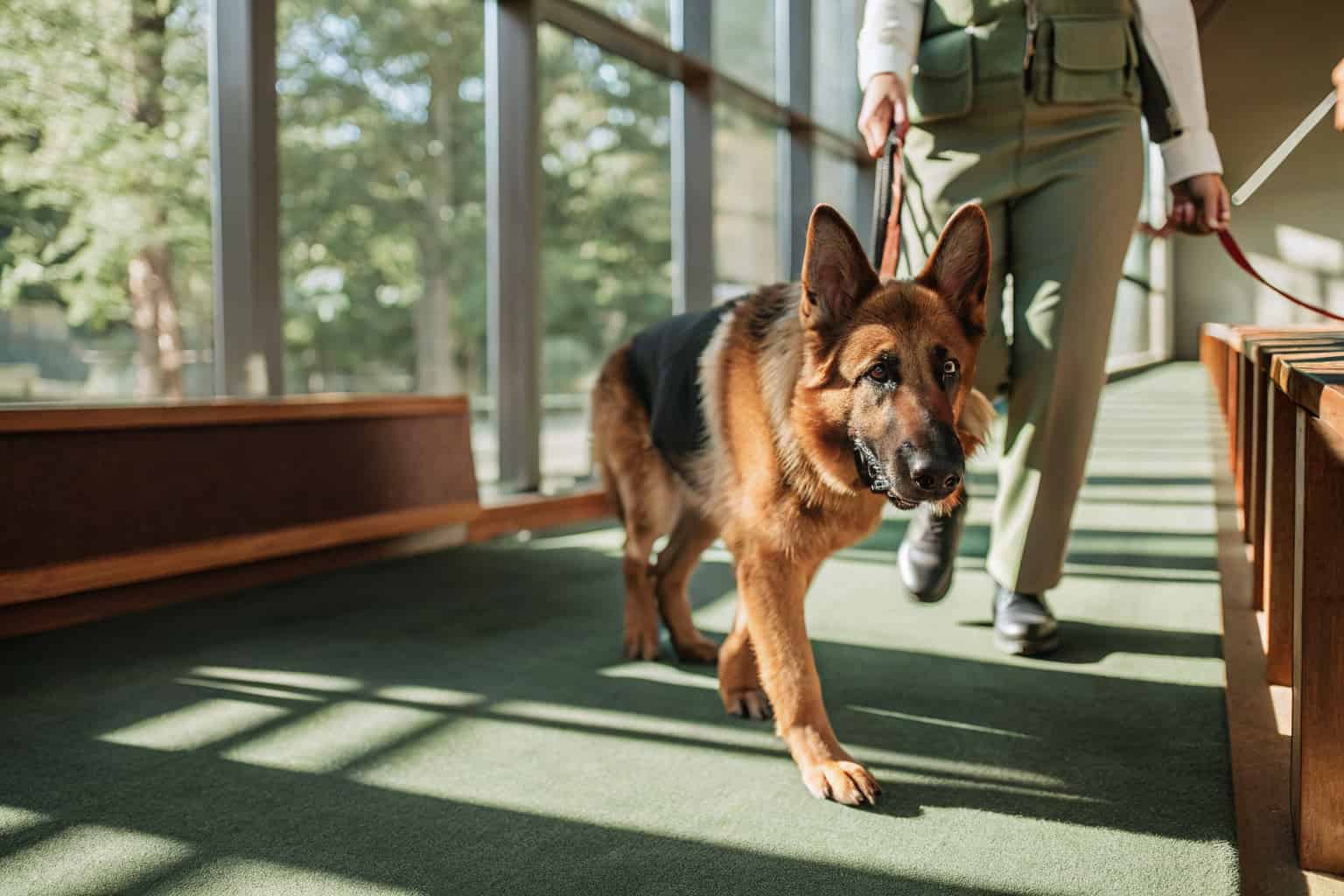
How to Make a Dog a Service Dog
A complete guide to the selection, training, and public access requirements that turn a well-bred dog into a legally recognized service animal.
What the Law Actually Requires
Under the ADA, a service dog is defined as a dog individually trained to do work or perform tasks for a person with a disability. There is no national registry, no required certification, and no vest requirement. What matters is that the dog is trained to perform specific tasks that directly mitigate the handler's disability — and that the dog behaves appropriately in public settings.
Step-by-Step: Service Dog Development
Owner-trained service dogs are legal under the ADA. The process requires time, consistency, and a dog with the right foundation.
Verify Your Disability Qualifies
Under the Americans with Disabilities Act (ADA), a service dog must be trained to perform tasks directly related to a handler's physical, psychiatric, sensory, or intellectual disability. Confirm that your condition meets the legal definition before beginning the process.
Select the Right Dog
Temperament is everything. The ideal service dog candidate is calm under pressure, not reactive to crowds or noise, focused on the handler, and physically sound. German Shepherds with proven European bloodlines consistently meet these benchmarks.
Complete Basic Obedience
Before any task training begins, the dog must have reliable, proofed obedience — sit, down, stay, heel, recall — in all environments. This foundation determines how quickly and reliably task work is built on top.
Train Disability-Specific Tasks
Task training must be directly tied to mitigating your disability. Common examples include deep pressure therapy, alerting to medical events, retrieving items, guiding, or interrupting self-harming behaviors. Each task must be trained to a reliable standard.
Proof for Public Access
A service dog must behave appropriately in all public settings — restaurants, airports, hospitals, stores. This requires systematic exposure training, distraction proofing, and maintaining work focus despite environmental pressure.
Consider Professional Certification (Optional)
The ADA does not require certification, but voluntary testing — such as the Canine Good Citizen (CGC) or Public Access Test — documents your dog's training level and can prevent unnecessary challenges in public settings.
Choosing the Right Dog for Service Work
Not every dog has the temperament for service work. A service dog candidate must demonstrate stable nerve strength, low environmental reactivity, strong handler focus, and the physical soundness to work reliably for years without breaking down.
German Shepherds — particularly those imported from European working programs — are among the most reliable service dog candidates available. Their combination of trainability, physical capability, and stable temperament makes them well-suited for psychiatric, mobility, and medical alert work.
- Documented health certifications (HD/ED evaluations)
- Stable nerve strength and calm environmental response
- Strong handler engagement and focus
- Physical soundness to work for 8–10 years
- Proven trainability from regulated bloodlines
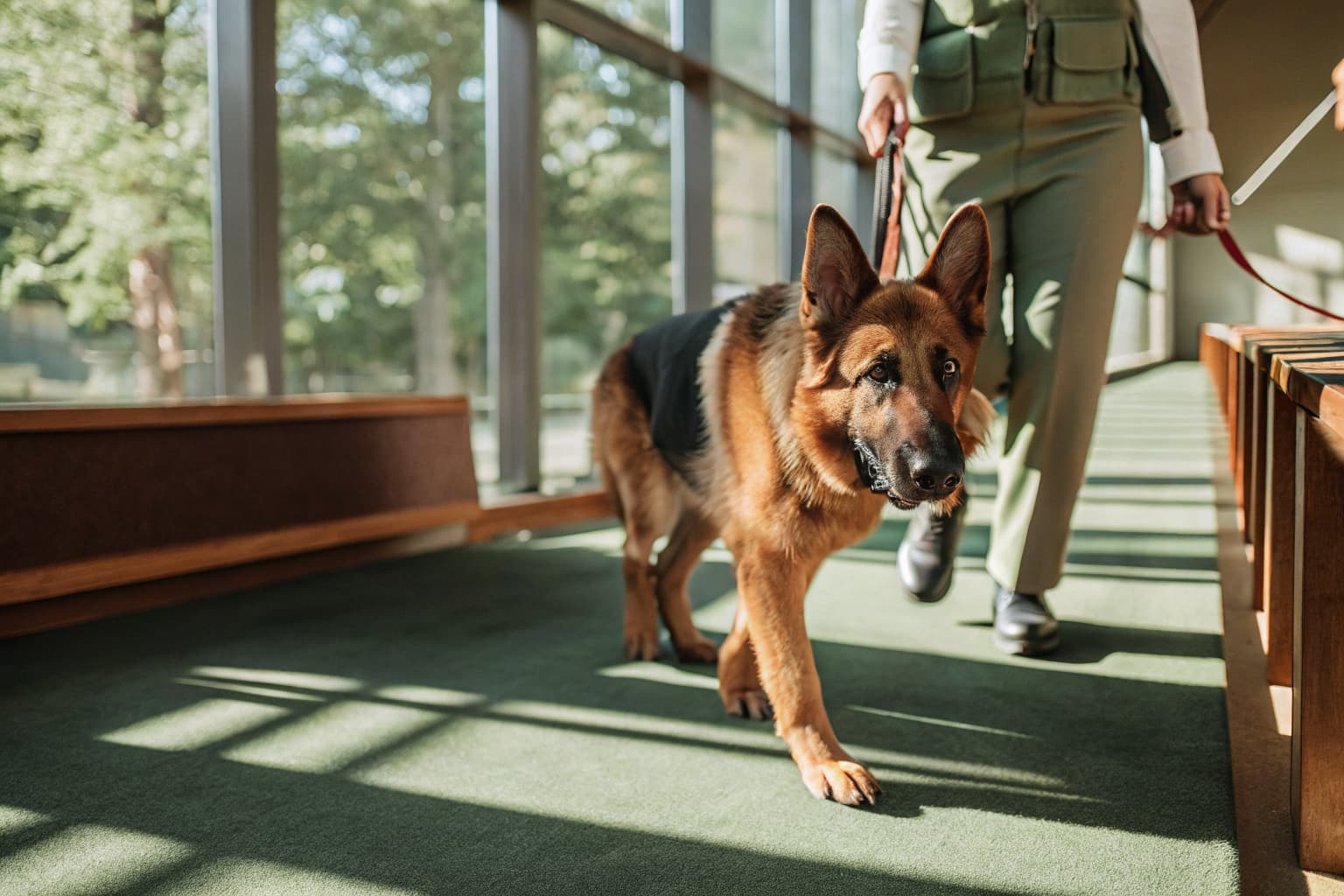
Examples of Legally Qualifying Service Dog Tasks
Tasks must directly mitigate a specific disability. Emotional comfort alone does not qualify — the behavior must be a trained, discrete action.
Psychiatric Support
Alerting to anxiety episodes, deep pressure therapy, room searches for PTSD.
Medical Alert
Detecting blood sugar drops, oncoming seizures, or allergen exposure.
Mobility Assistance
Bracing, retrieving dropped items, opening doors, and counterbalancing.
Guide Work
Navigating obstacles and guiding handlers with visual impairments safely.
Understanding Public Access Requirements
A service dog has the legal right to accompany its handler in virtually all public spaces — including restaurants, hotels, stores, transportation, and hospitals. However, the dog must be under control and must not pose a direct threat to the health or safety of others.
What Businesses Can Ask
Only two questions are permitted under the ADA: (1) Is this a service dog required because of a disability? (2) What work or task has the dog been trained to perform?
What Businesses Cannot Ask
Businesses cannot require documentation, a vest, certification, or demand that you demonstrate the task. They also cannot ask about the nature of your disability.
When Access Can Be Denied
A service dog can be asked to leave if it is out of control and the handler does not take action, or if it is not housebroken. The handler may return without the dog.
Handler Responsibilities
The handler is responsible for the dog's care, supervision, and behavior at all times. The dog must remain under control — on a leash or harness unless that interferes with the task.
Owner Training vs. Program Dogs
The ADA permits owner-training, meaning you are not required to go through a formal program. However, the trade-off between self-training and acquiring a program-trained dog involves real differences in time, cost, and reliability.
Owner Training
Legal under the ADA. Requires significant time investment — typically 1.5 to 2 years — and access to qualified professional trainers for task work and public access proofing.
Program-Trained Dog
Placed already trained to your specific disability tasks. Higher upfront cost, but the dog arrives with a verified training foundation and known public access reliability.
Professional Assistance
Working with a professional trainer throughout the owner-training process dramatically increases success rates and helps avoid common task-training mistakes.
The honest assessment:
Starting with a dog that has the right genetic foundation — stable temperament, documented health, and proven trainability — is the single biggest factor in whether service dog training succeeds. A poorly-bred dog with unstable nerves cannot be reliably trained for service work regardless of the effort invested.
How Long Does It Take?
Foundation & Basic Obedience
Establishing the obedience baseline required before task training begins. All behaviors must be reliable in low-distraction environments first.
Task Training
Teaching and proofing the specific disability-mitigating tasks. Each task must be reliable across all environments before public access work begins.
Public Access Proofing
Systematic exposure to real-world environments — malls, transit, hospitals, restaurants — building reliability under increasing distraction.
Ongoing Maintenance
Service dogs require continued training practice throughout their working life to maintain reliability and prevent task drift.
Looking for a Service Dog Candidate?
The foundation of any successful service dog is a well-bred, health-certified dog with the temperament and trainability the work demands. Falcon K9 Protection specializes in placing exactly those dogs.
Our imported German Shepherds from elite European programs offer the nerve strength, handler engagement, and physical soundness that service dog training requires. Contact us to discuss your specific needs.
Questions About Service Dog Requirements?
Our team has experience placing dogs into service and working roles. Reach out to discuss your situation and whether one of our German Shepherds is the right match for your needs.