Protection Dogs · Family Safety

The Family Guardian Debate

Families want a dog that sleeps on the couch, plays with the kids — and still stands between their children and danger. That's not a contradiction. It's the standard every true family guardian must meet.
June 20268 min readFalcon K9 Protection
The Paradox

What Families Actually Want — and Why It Seems Impossible

Every family that contacts us for a protection dog describes the same picture: a dog that is relaxed and friendly in the home, patient with children, calm around guests — and yet fully capable of stepping up when it counts. They want the gentle giant who naps on the couch in the afternoon and stands guard at 2 a.m. without breaking a sweat.

To most people, this sounds like asking for two completely different dogs. Popular culture has conditioned us to believe protection dogs are always tense, always reactive, always one trigger away from action. That image is not only wrong — it describes a dangerous dog, not a trained one.

The reality is that the best family guardian dogs are defined precisely by their ability to live comfortably in both worlds. The challenge is not finding a dog that can do this. The challenge is understanding what the training behind it actually looks like — and why it matters so much.

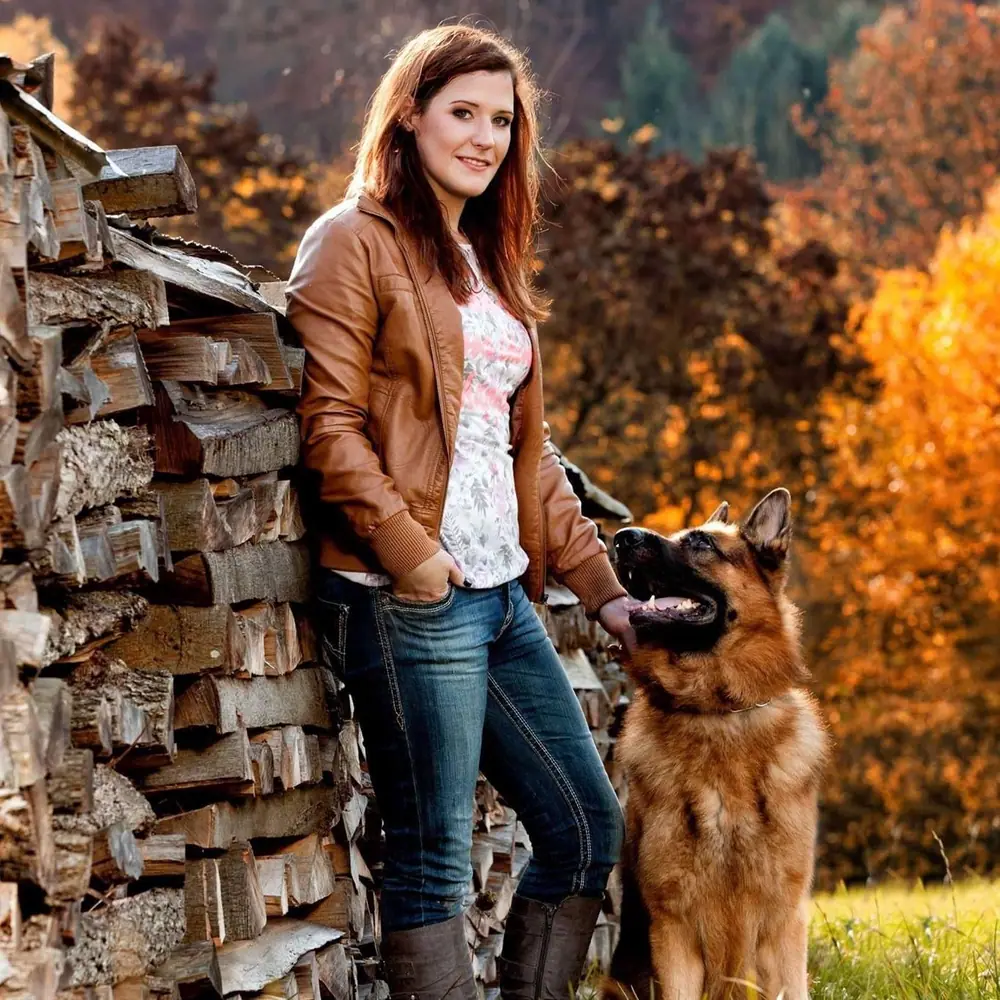
Woman standing with her loyal German Shepherd guardian dog in an autumn woodland setting
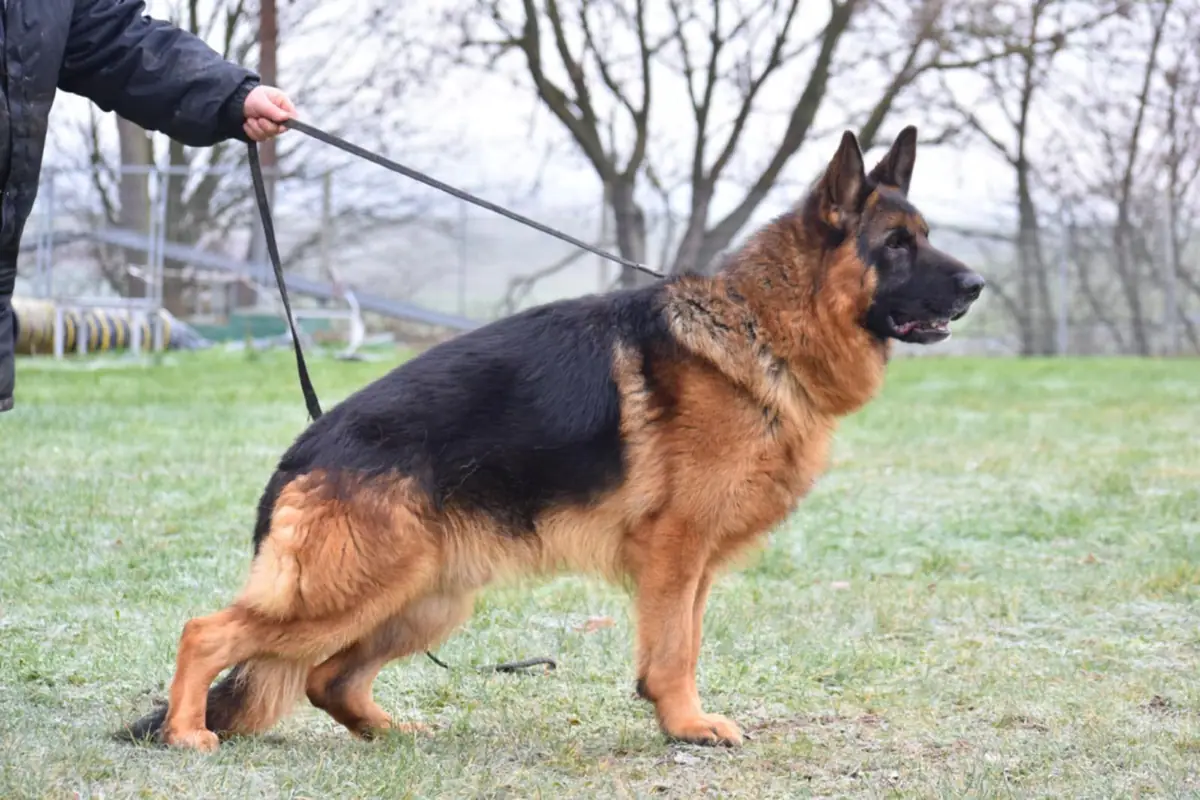
German Shepherd in controlled training stance showing precision and stability — the hallmark of a properly balanced protection dog
The Balancing Act

Confidence vs. Aggression: A Critical Distinction

Here is where most people get it wrong: aggression and protection are not the same thing. An aggressive dog bites because it is afraid, overwhelmed, or poorly socialized. A protection dog acts because it is confident, trained, and commanded — or because it has correctly assessed a genuine threat.

A true, ethical family guardian must be stable above all else. Stability means the dog is not rattled by unfamiliar environments, unexpected noises, strangers, or children moving unpredictably. A dog that is always on edge, always suspicious, always scanning for threats is not a protection dog. It is a liability.

The best working German Shepherds carry themselves with quiet confidence. They are observant without being reactive. They assess, not assume. They have the nerve strength to remain composed under pressure — which is exactly why they can be trusted to make the right call when it actually matters.

The Core Principle

What Separates a Family Guardian from a Dangerous Dog

Three qualities define every dog that earns the right to be called a true family guardian.

01

Stable Temperament

The dog is not rattled by daily life — children, guests, noise, unfamiliar places. Stability is not passivity. It is the foundation of trustworthy behavior in every environment.

02

Trained Confidence

Confidence comes from structure, not genetics alone. Proper conditioning, repetition, and socialization build a dog that is certain of itself — and certain of what it is allowed to do.

03

Reliable Neutrality

In the absence of a real threat, the dog is neutral — calm, social, and approachable. It does not project tension onto every interaction. When called upon, it engages fully. When not, it disengages completely.
Neutrality Training

Teaching the On/Off Switch

The central goal in protection dog training is not teaching the dog to bite. Any dog will bite under the right circumstances. The goal is teaching the dog to understand precisely when biting is appropriate — and to return to a completely neutral state the moment the threat is gone.

Trainers call this the "on/off switch." It is one of the most difficult things to build in a dog, and one of the clearest markers of a properly trained protection dog. A dog with a reliable switch can be fully engaged during protection work and be lying calmly at your feet an hour later — not because it has forgotten what it knows, but because it has been taught that there is a time for each.

Building this requires months of structured work — controlled exposure to different environments, consistent obedience under distraction, realistic scenario training, and a handler who is equally clear and consistent. The dog mirrors its handler. A calm, clear handler produces a calm, clear dog.

This is also why the handler relationship matters so much. A properly trained family guardian needs an owner who can maintain the same clarity at home that the trainer established in the field. Without that consistency, the switch gets muddled — and a muddled switch is where problems begin.

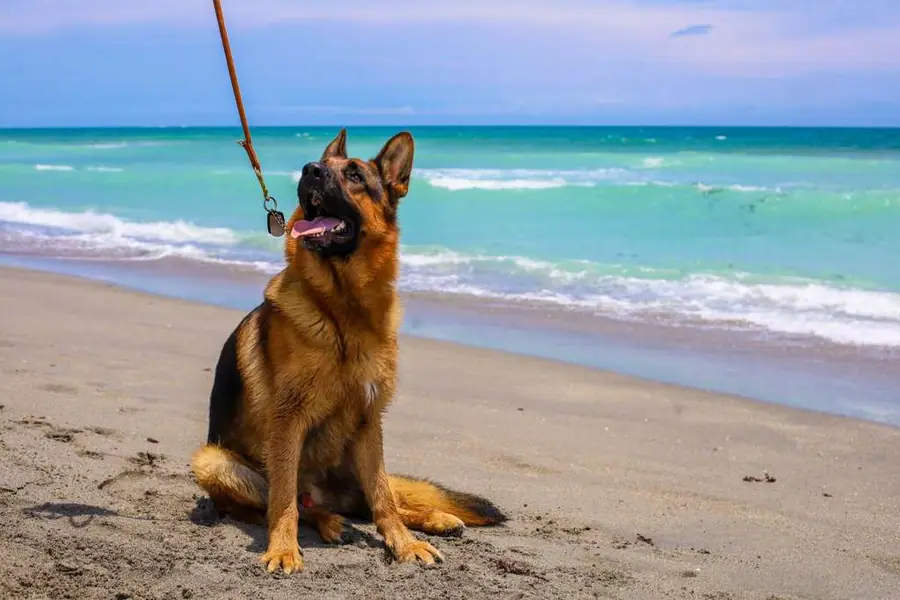
German Shepherd sitting calmly on a leash at the beach — demonstrating the relaxed, neutral state a well-trained family guardian maintains in everyday life
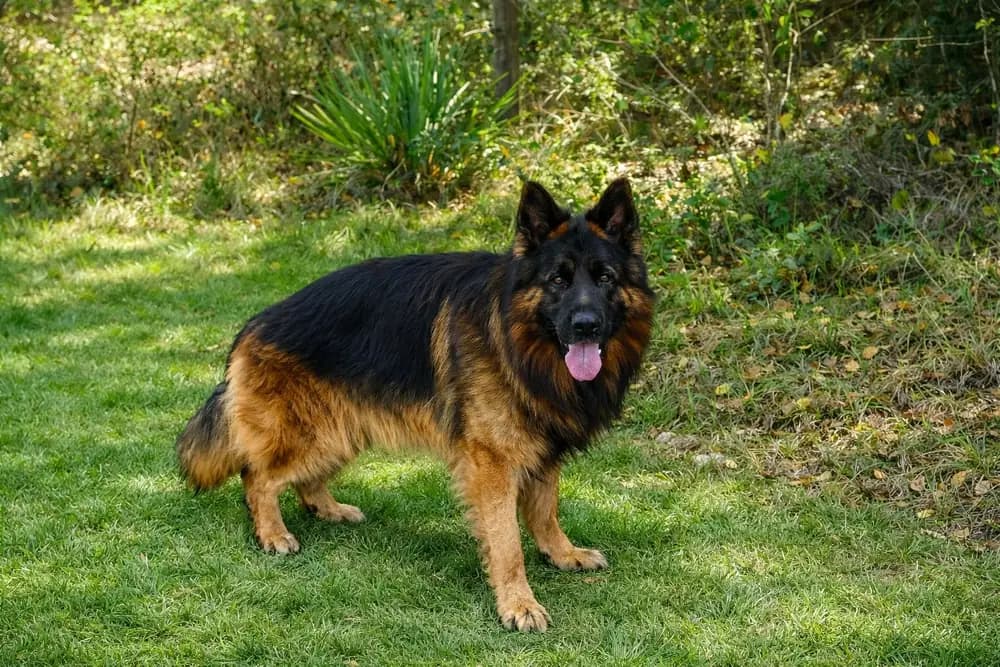
Confident German Shepherd standing alert on a lawn — at ease in a family environment while remaining observant
In Practice

What the Finished Dog Actually Looks Like

A properly placed family guardian is not a dog that makes people nervous. Guests should be able to walk into your home without the dog escalating. Children should be able to roughhouse in the yard without triggering a false response. The dog should be present and watchful — not tense and suspicious.

At the same time, the dog's response to a genuine intrusion should be unmistakable. A confident protection dog does not bark and run. It moves toward the threat, assesses, and acts — with purpose and without hesitation. The same dog that spent the afternoon napping beside your kids will stand its ground without a second thought if the situation calls for it.

This is not theory. It is the product of the right genetics, the right selection, and the right training — combined with a handler who understands their role in maintaining what was built. When all three elements align, the paradox disappears. You do not have two different dogs. You have one exceptional one.

The Bottom Line

The debate between "gentle giant" and "fierce protector" is a false choice. The right protection dog — properly selected, trained for neutrality, and placed with a committed handler — is not one or the other. It is both, by design.

TagsFamily GuardianProtection DogsGerman ShepherdDog TrainingNeutrality TrainingFamily SafetyTemperamentSchutzhundWorking DogsK9 Selection
Ready to Find Your Family Guardian?

Talk to a Professional Who Understands Both Sides

At Falcon K9 Protection, we specialize in finding and placing dogs that are genuinely built for family life — dogs that are calm, confident, and capable when it counts. Schedule a free consultation to discuss your family's specific needs.