K9 Training · Behavioral Management

Reactivity & Behavioral Management

High-drive German Shepherds are wired for intensity — and reactivity is the price of that drive. The debate over how to manage it has divided K9 handlers for decades. Here's what balanced reinforcement actually looks like in practice, and why it produces calmer, more stable dogs than either extreme alone.
June 202611 min readFalcon K9 Protection
The Root Cause

Why High-Drive Dogs Are Wired for Reactivity

Reactivity is not a character flaw. In a working-line German Shepherd, it is often the flip side of the same genetic coin that produces elite drive, courage, and environmental alertness. These dogs were selectively bred over generations to notice everything, respond quickly, and act decisively. That wiring does not come with an off switch pre-installed.

What we call reactivity — explosive responses to triggers like other dogs, fast movement, loud noises, or unfamiliar people on leash — is the dog's arousal system firing faster and harder than the situation warrants. In a police K9 working a perimeter, that arousal is an asset. In a dog navigating a busy park or a veterinary waiting room, it becomes a management problem.

The challenge for handlers and trainers is clear: how do you preserve the drive that makes these dogs exceptional while teaching them to regulate arousal, hold behavioral thresholds, and respond to handler direction even when every instinct is firing at once?

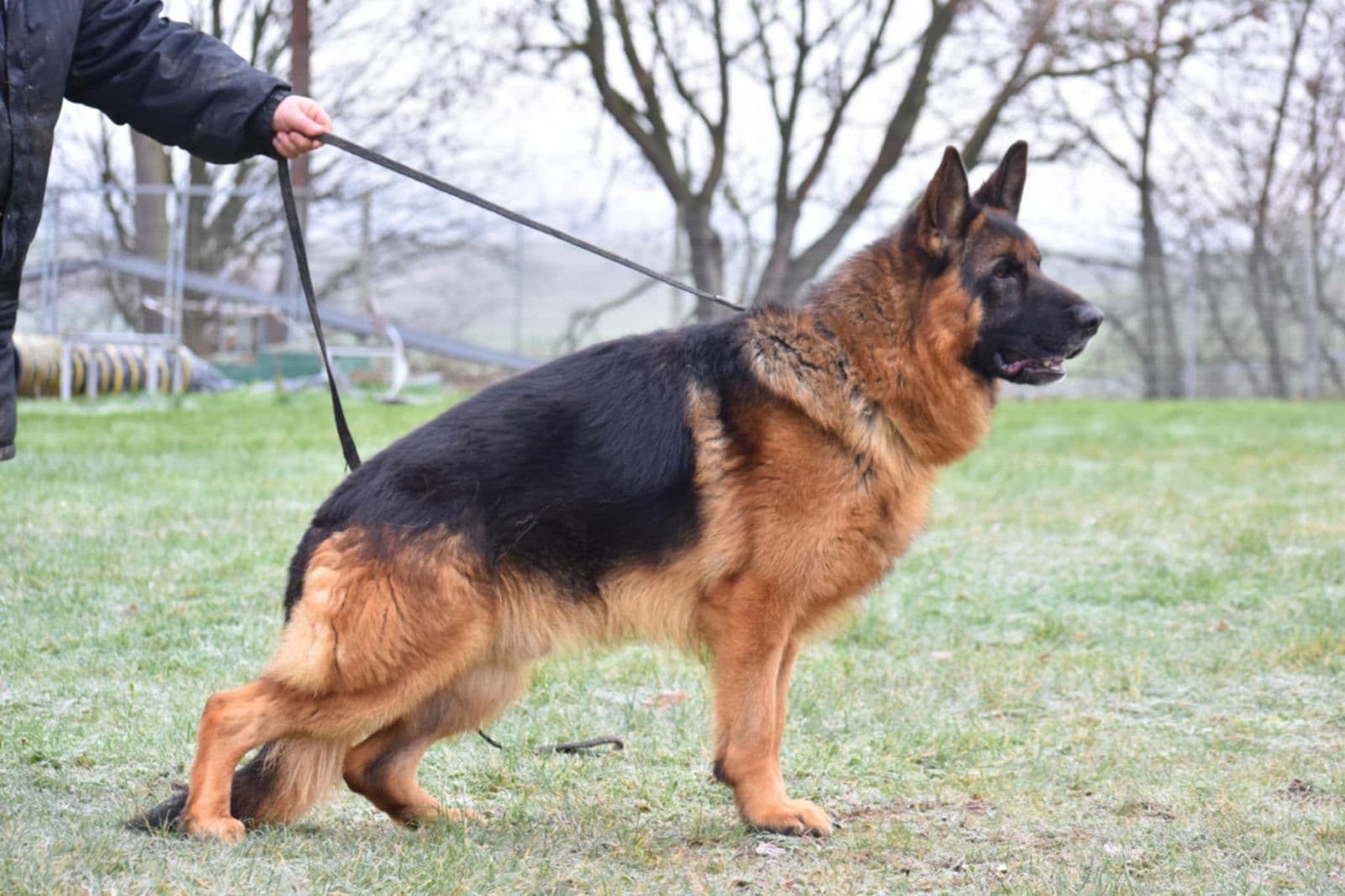
German Shepherd on training leash in structured behavioral management session, demonstrating controlled focus
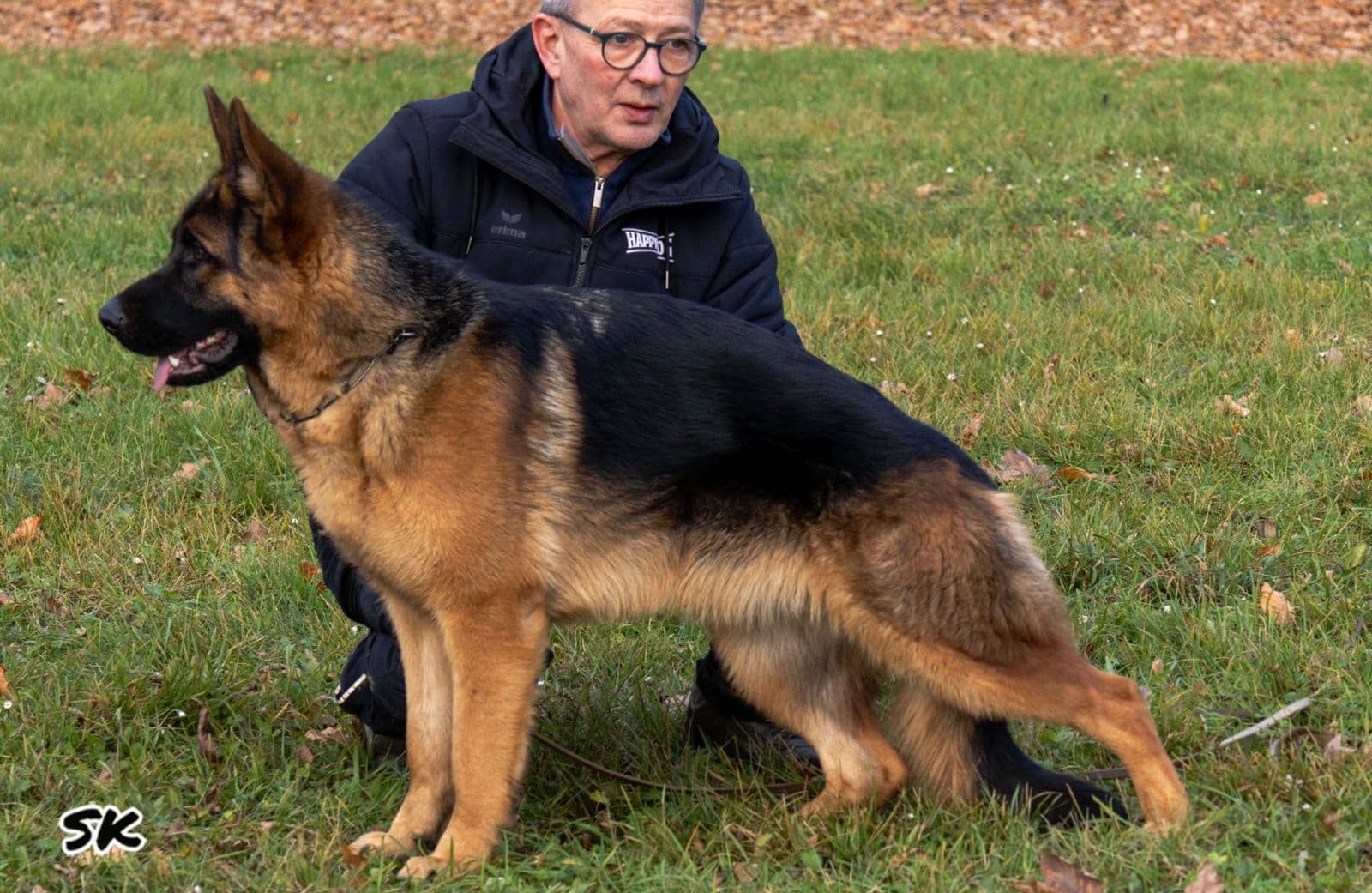
K9 handler working with German Shepherd in structured training environment — demonstrating the handler-dog communication central to balanced behavioral management
The Debate

The K9 Handler Divide: Two Schools, One Problem

The training world is split along a well-worn fault line. On one side: purely positive, force-free trainers who argue that reactive behavior must be addressed exclusively through counter-conditioning and desensitization, never through corrections. On the other: traditional compulsion trainers who reach for aversive tools at the first sign of reactivity.

Both approaches have real limitations when applied to high-drive working dogs. Pure positive training without any clear boundary communication can leave a dog confused about the rules of engagement — building frustration that expresses itself as increased reactivity over time. Pure compulsion, meanwhile, addresses the symptom without the root cause, suppressing the reaction through fear while the underlying arousal remains unaddressed — and often escalates.

Experienced K9 handlers increasingly recognize that the answer lies between these poles: a balanced approach that uses positive reinforcement as its primary tool, backed by fair, well-timed, appropriately scaled corrections that give the dog clear, consistent information about what is and is not acceptable behavior.

The Framework

What “Balanced” Actually Means in Practice

Balanced reinforcement is not a compromise between two bad options — it is a precision framework built around the dog's learning state and the handler's communication clarity.

01

Reward What Works

Positive reinforcement remains the engine of the program. Every correct response to a trigger — a check-in with the handler, a maintained sit, a calm pass — earns immediate, meaningful reward. The dog learns that composure is the highest-paying behavior in the repertoire.

Foundation of Balanced Training
02

Correct Clearly

When the dog crosses a known behavioral threshold it has already demonstrated the ability to hold, a fair correction delivers precise information: that behavior is not acceptable here. The correction is scaled to what is needed — no more, no less — and is never delivered in anger.

03

Redirect Immediately

A correction without redirection leaves a behavioral vacuum. After a correction, the handler immediately cues a behavior the dog knows — sit, watch, heel — and rewards the dog for complying. This builds the replacement habit that eventually crowds out the reactive response.

04

Build Threshold Slowly

Systematic threshold management — gradually reducing distance to triggers at a pace the dog can handle — is how reactivity is permanently reduced. The balanced approach gives the trainer two tools: rewarding calm below threshold and correcting transgression above it.

Leash Reactivity

Curbing Leash Reactivity: The Handler's Most Common Battle

Leash reactivity in working-line German Shepherds is partly arousal, partly frustration, and partly a communication failure between dog and handler. The leash creates a tension that amplifies the dog's response to stimuli it might pass neutrally off-leash. That amplification, combined with high drive and insufficient handler communication, produces the lunging, barking, and spinning that owners dread.

Balanced management attacks this on multiple fronts. First, the handler learns to read the dog's arousal signals before the threshold is reached — the stiff posture, the hard stare, the shortened breath — and intervenes with a calm redirect before the reaction fires. Second, genuine threshold work creates new conditioning: the sight of a trigger predicts calm behavior, not explosion, because calm behavior has been rewarded consistently at every sub-threshold exposure.

When the dog does breach threshold, a fair leash correction paired with an immediate redirect communicates clearly and without drama. The key is that the correction is precise, not emotional — information delivered, not punishment administered. That distinction is everything.

German Shepherd sitting calmly on leash at the beach — the hallmark of a dog with managed arousal and solid leash manners
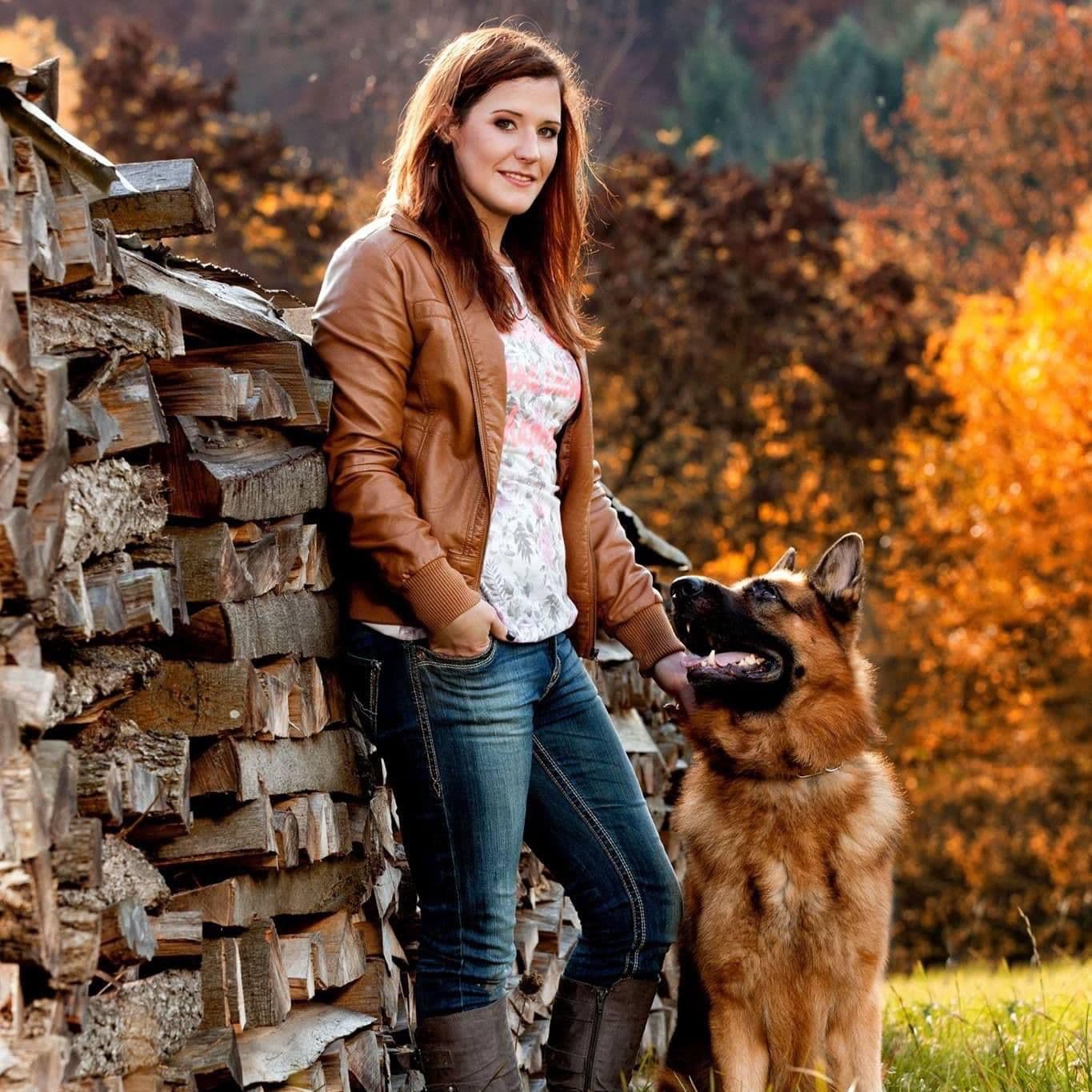
Owner and German Shepherd sharing a calm, bonded moment — the foundation of managed protective instincts and stable behavior
Protective Instincts

Managing Protective Instincts Without Suppressing Drive

The protective instinct in a working German Shepherd is not a bug — it is one of the most valued features. But unmanaged protection instinct does not produce a reliable guardian. It produces an unpredictable dog that reacts to perceived threats based on arousal level rather than handler direction. That is a liability, not an asset.

Balanced behavioral management channels the protective instinct rather than eliminating it. The goal is a dog that is alert and responsive to genuine threat cues while remaining stable and handler-directed in ambiguous or neutral situations. This is achieved by building a clear command structure — what the handler says goes — without punishing the instinct itself. The dog learns that its protection drive is an asset it deploys on direction, not a reflex it fires on instinct.

Fair corrections play a specific role here: they communicate boundaries around unsolicited protective behavior without creating the avoidance and conflict that pure suppression causes. The dog retains its protective capability fully intact — but understands precisely when to act and when to wait for the handler's lead.

Neurosis Prevention

Preventing Neurosis in Highly Driven Dogs

Neurosis in high-drive dogs is most often the product of two training failures: unpredictable handler communication, and chronic over-arousal without adequate outlet or resolution. A dog that never knows what the rules are — because they change based on the handler's mood, tolerance level, or training philosophy — cannot develop the behavioral stability required of a working animal.

The same applies to drive management. A working-line German Shepherd that never receives appropriate outlets for its drive — structured work, clear goals, regular physical and mental stimulation — accumulates arousal it cannot process. That unresolved arousal expresses itself as stereotypies, redirected aggression, OCD-like fixations, or generalized reactivity. This is neurosis in its most recognizable form.

Prevention requires a program that is consistent, predictable, and appropriately demanding. Balanced reinforcement provides the handler with a reliable language the dog can read clearly. Regular structured work provides the arousal outlet the drive demands. Together, they produce what every high-drive dog needs: a framework that makes sense, and a handler that is worth working for.

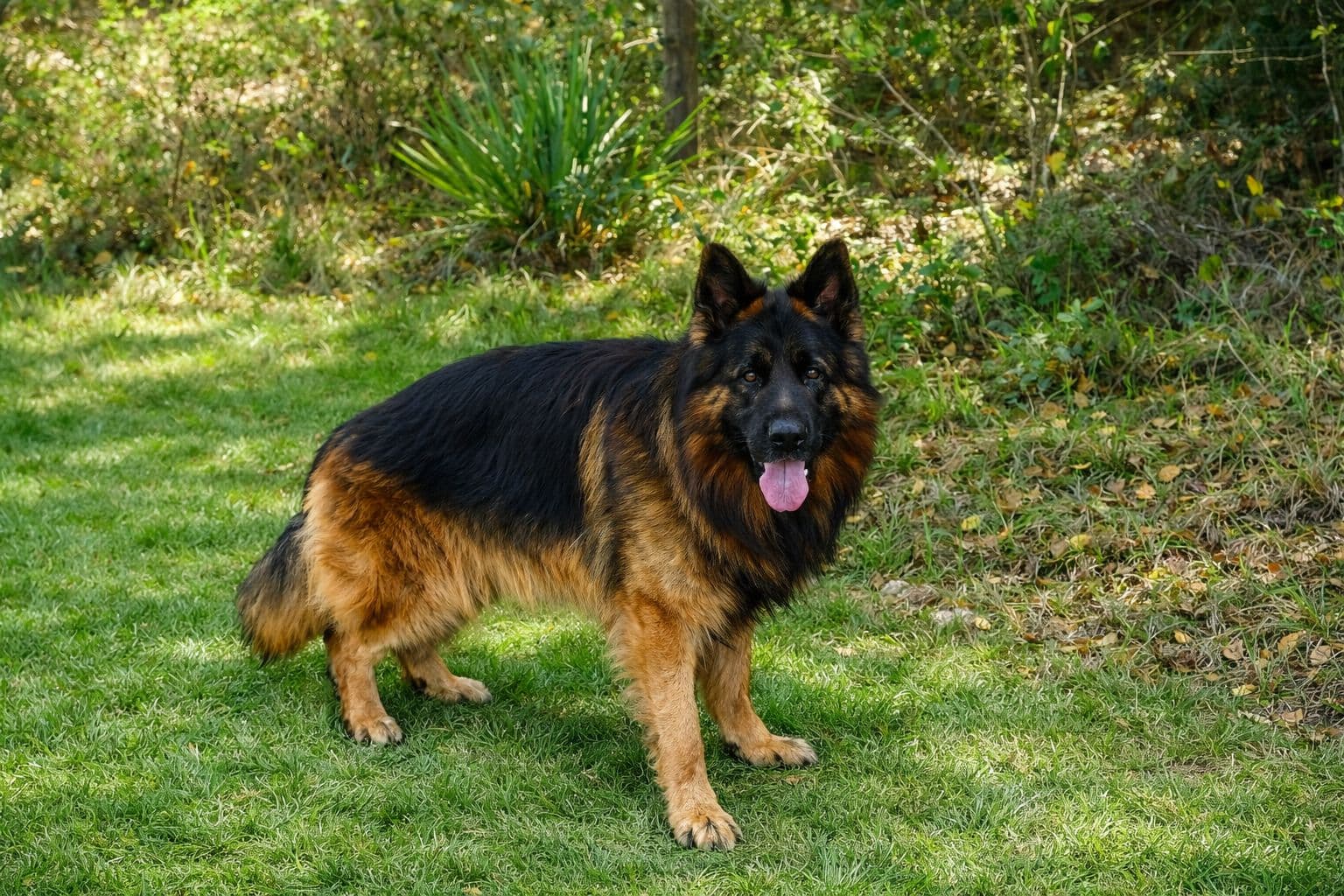
German Shepherd standing calm and stable on a green lawn — the hallmark of a well-managed working dog free from behavioral neurosis
What Works

What Balanced Management Produces Over Time

Across working-dog programs worldwide, handlers who adopt balanced reinforcement consistently report the same set of measurable behavioral improvements.

01

Lower Baseline Arousal

Dogs trained with consistent, predictable rules settle faster between stimuli. Without the constant uncertainty of inconsistent handler communication, their nervous systems can genuinely decompress — reducing the ambient arousal that makes triggers harder to pass.

02

Faster Threshold Recovery

A balanced dog that does breach threshold recovers to a working state significantly faster than one trained purely through suppression. Because the correction is information rather than punishment, the dog processes it and re-engages — rather than cycling through escalating stress.

03

Preserved Drive & Confidence

Unlike pure compulsion, balanced reinforcement does not suppress drive — it shapes it. Dogs maintain their natural working intensity, prey drive, and confidence while demonstrating measurably improved arousal regulation. The dog becomes more capable, not less.

The Bottom Line on Reactivity

A reactive German Shepherd is not a broken dog — it is a high-drive dog without a clear framework. Balanced reinforcement provides that framework: rewarding what works, correcting what doesn't, and building the arousal tolerance that transforms an explosive working dog into a reliable one. The drive stays. The neurosis doesn't have to.

TagsReactivityBehavioral ManagementBalanced TrainingLeash ReactivityWorking DogsK9 TrainingProtective InstinctsGerman ShepherdDrive ManagementNeurosis PreventionHandler BondPositive Reinforcement
Work With Experts Who Understand Drive

Get Your High-Drive Dog on the Right Program

At Falcon K9 Protection, we understand the demands of working-line German Shepherds — their drive, their reactivity, and what it takes to develop them into stable, reliable partners. Schedule a free consultation to discuss your dog's specific behavioral profile.