K9 Training · Operant Conditioning

Positive Reinforcement in K9 Training

The science of operant conditioning explains why force-free methods don't just produce more obedient German Shepherds — they produce more confident, stable, and reliable ones. Here's what the research actually says, and how we apply it.
June 202610 min readFalcon K9 Protection
The Philosophy

Why Force Has No Place in Quality K9 Training

For decades, corrections-based training — leash pops, choke chains, alpha rolls, and compulsion — dominated the K9 world. The assumption was simple: force creates compliance. And in the short term, it sometimes does. But at what cost?

Modern behavioral science has repeatedly demonstrated that force-based methods suppress behavior through fear rather than building genuine understanding. A dog trained through punishment may stop performing an unwanted behavior — but it does so because it is afraid of consequences, not because it understands what is expected of it. That distinction matters enormously when you need reliability under real-world pressure.

At Falcon K9 Protection, we train without force — not as a philosophical stance, but as a practical one. Dogs trained through positive reinforcement show higher motivation, stronger handler bonds, faster learning, and more durable behavior under stress. The science is not ambiguous on this point.

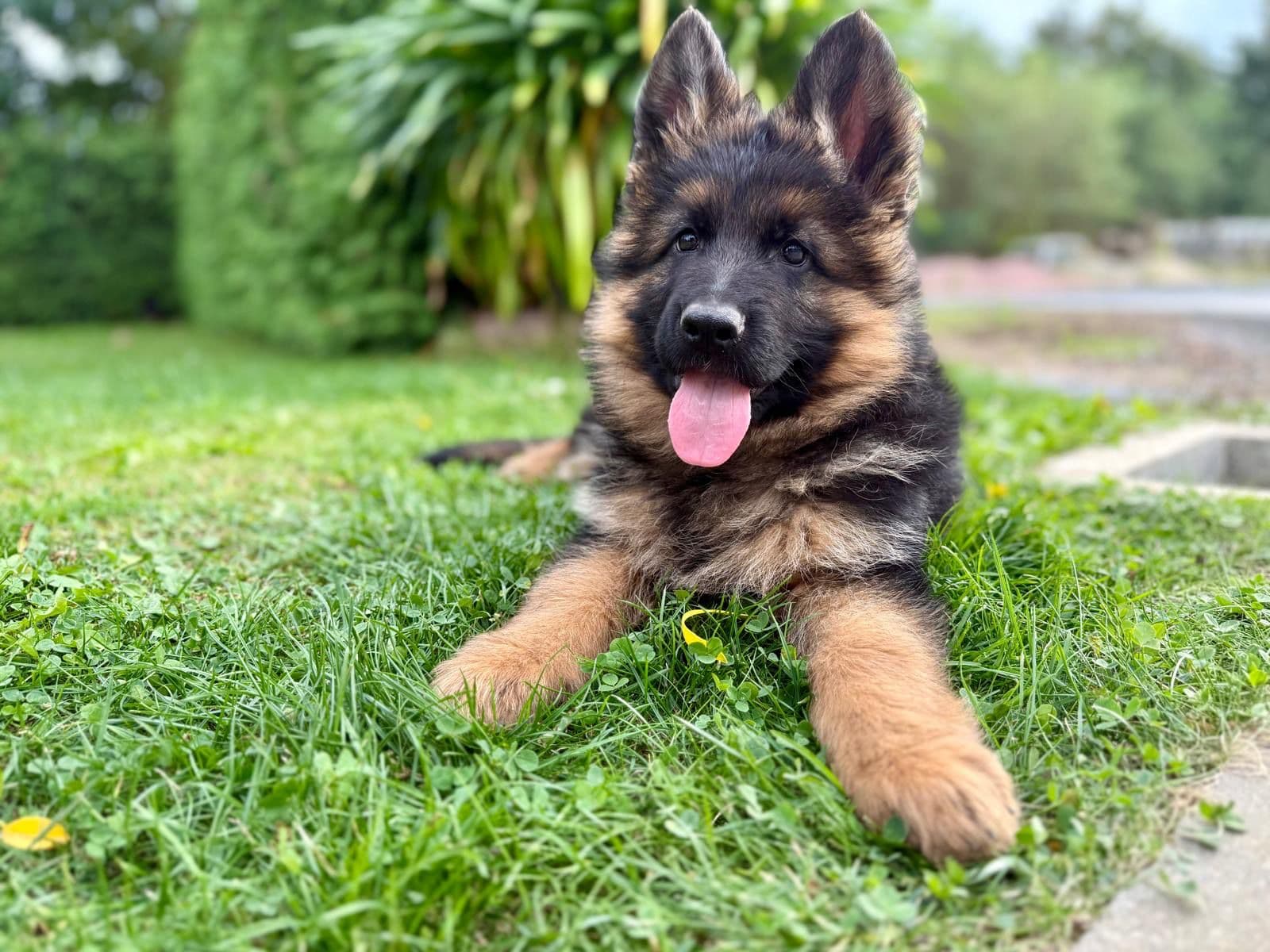
German Shepherd puppy lying relaxed on green grass — the ideal temperament foundation for positive reinforcement training
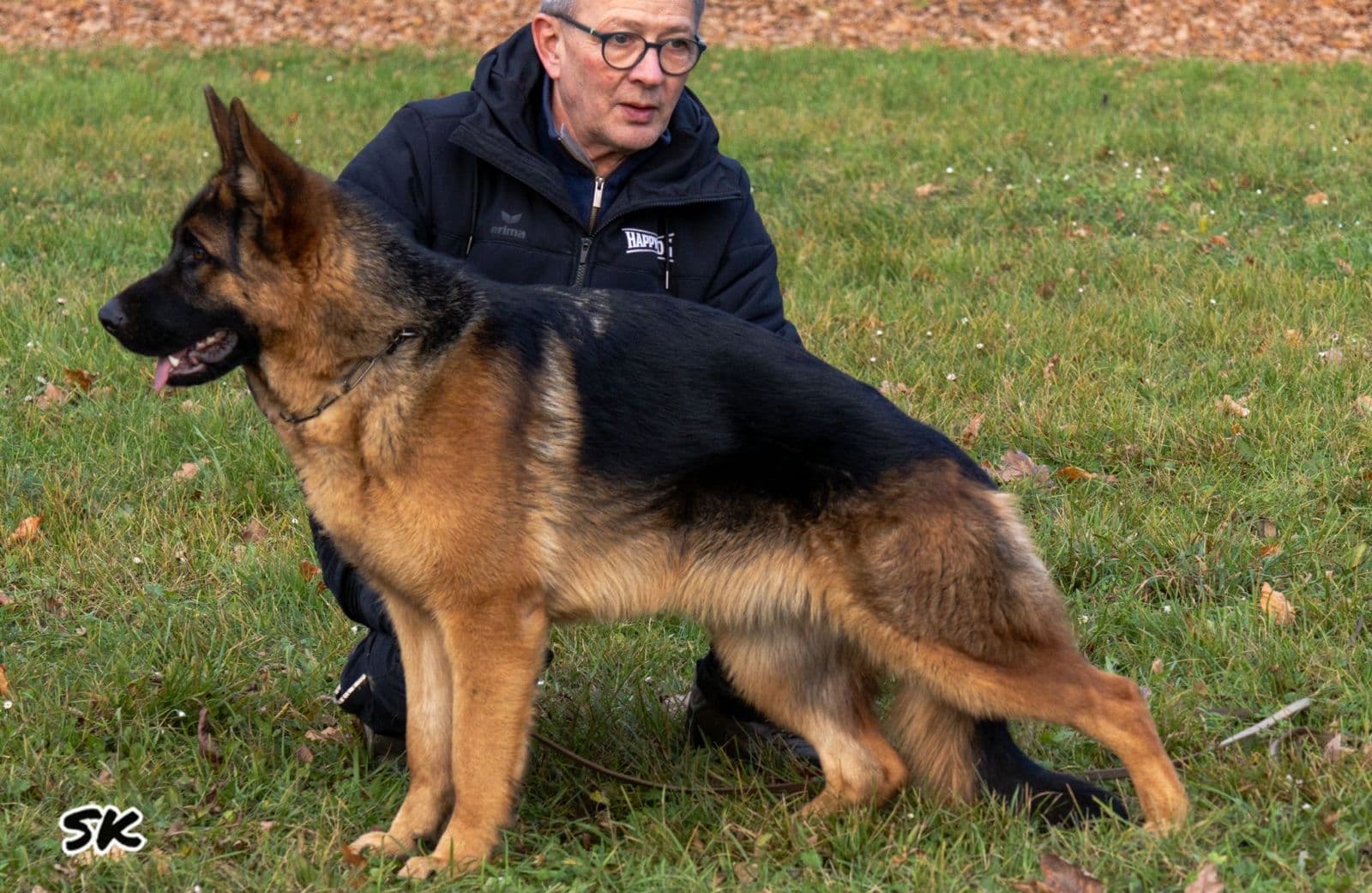
Professional K9 trainer working with a German Shepherd in a structured positive reinforcement session
The Science

What Operant Conditioning Actually Means

Operant conditioning is the formal term for learning through consequences. First described by psychologist B.F. Skinner in the 1930s, it established that behavior is shaped by what follows it. Behaviors followed by positive outcomes are repeated. Behaviors followed by negative outcomes are suppressed.

This framework gives K9 trainers a precise, systematic language for behavior modification. Every training decision — whether to reward, ignore, redirect, or remove something the dog wants — can be mapped to one of four specific mechanisms. Skilled trainers understand not just what to do, but exactly why it works at a neurological level.

German Shepherds, with their high working intelligence and deeply social natures, are exceptionally responsive to operant conditioning methods. They are dogs built to solve problems, engage with handlers, and earn rewards through effort. That drive is precisely what positive reinforcement channels so effectively.

Operant Conditioning

The Four Quadrants — and Why We Emphasize One

Operant conditioning defines four ways behavior can be changed. Understanding all four helps explain why positive reinforcement produces the most reliable results.

R+

Positive Reinforcement

Adding something desirable after a behavior to increase the likelihood it will happen again. A treat, toy, or praise after a correct sit. This is the primary tool in force-free training — and the most powerful for building durable behavior.

Our Primary Method
P+

Positive Punishment

Adding something unpleasant after a behavior to decrease it. Leash corrections, shock collars, alpha rolls. This is what force-based training relies on. It can suppress behavior quickly but creates fear, stress, and unpredictable side effects.

R-

Negative Reinforcement

Removing something unpleasant when a desired behavior occurs. Releasing leash pressure when the dog sits. It reinforces behavior but requires creating discomfort first. Used sparingly, if at all, in quality modern training programs.

P-

Negative Punishment

Removing something desirable after an unwanted behavior to decrease it. Taking away a toy when a dog jumps up. This is used ethically in positive training when gentle correction is needed — it communicates without creating fear or pain.

The Breed Advantage

Why German Shepherds Excel Under Positive Methods

Not all breeds respond identically to positive reinforcement — and the German Shepherd is among those best suited to it. Working-line GSDs were bred for cooperation with human handlers, high problem-solving drive, and an intrinsic motivation to work. These traits are the raw material that operant conditioning transforms into precision behavior.

A working German Shepherd presented with a clear behavior-reward relationship will actively experiment to earn that reward. They learn faster, retain behaviors longer, and generalize commands across environments more reliably than dogs trained through avoidance of corrections. Desire drives learning far more efficiently than fear.

Equally important: German Shepherds are sensitive dogs. The same nerve strength that makes them excellent K9s also means they register stress acutely. Force-based training introduces chronic low-level stress that degrades reliability over time. Positive methods preserve and amplify their natural working state — confident, engaged, and eager to perform.

German Shepherd sitting attentively on a beach, demonstrating focused engagement — the result of positive reinforcement training
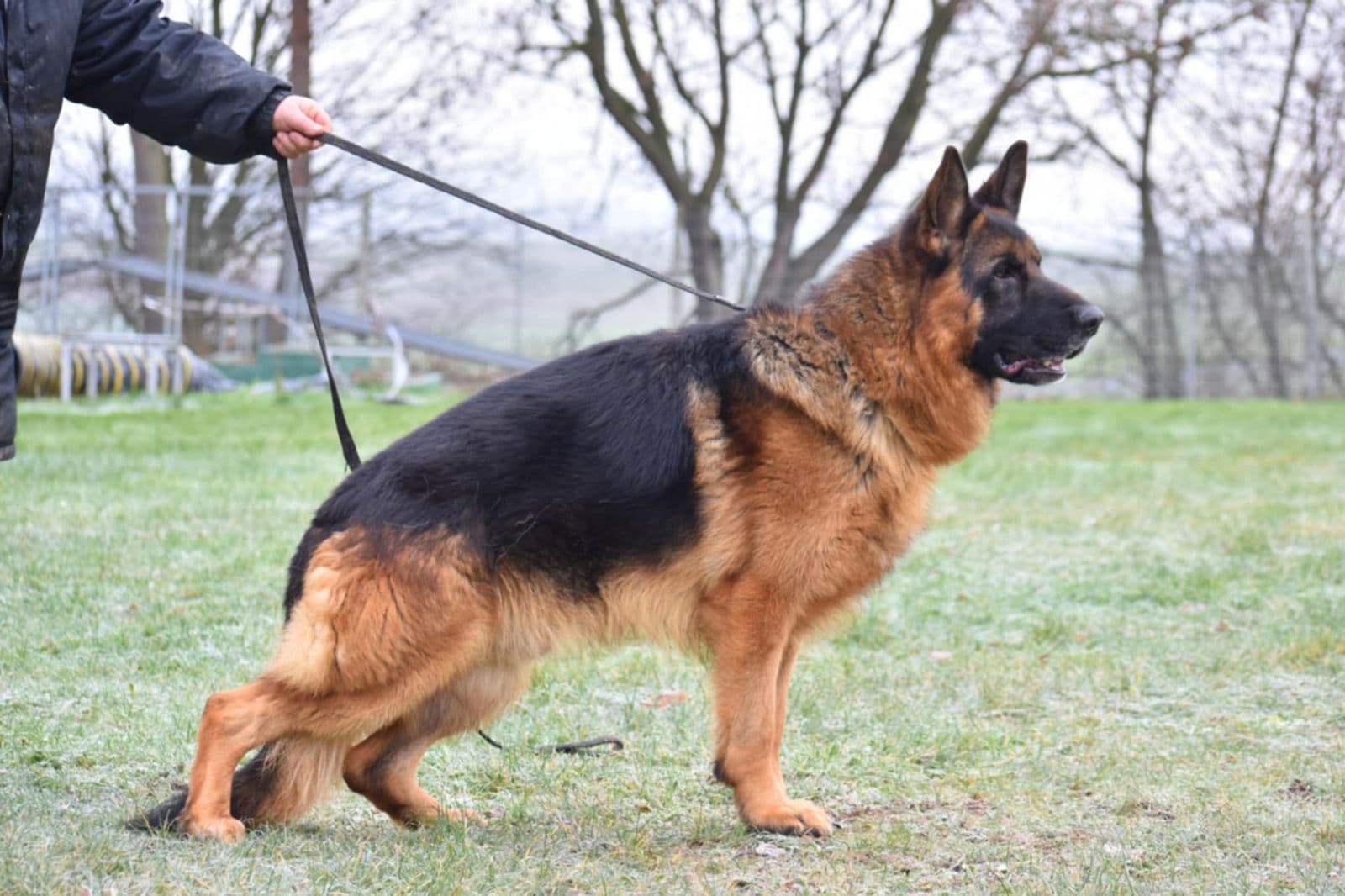
German Shepherd on leash in structured positive reinforcement training session, showing focus and body control
In Practice

Building Reliability Without Force: The Core Techniques

The foundation of force-free K9 training is the marker: a precise signal — typically a clicker or a verbal "yes" — that tells the dog the exact moment it performed the correct behavior. This bridges the gap between action and reward with millisecond accuracy, giving the dog clear information it can act on.

From there, trainers use three main approaches: capturing (marking a behavior the dog offers naturally), luring (using food or a toy to guide the dog into position), and shaping (reinforcing successive approximations toward a final behavior). Each has its place depending on the behavior being taught and the dog's stage of learning.

As behaviors are established, rewards are transitioned from food to real-life reinforcers — play, praise, freedom, work itself. A German Shepherd with a high prey drive will work just as hard for a tug toy as for a treat. This flexibility is a key advantage of operant conditioning: it can be customized entirely to what motivates each individual dog.

Research-Backed Results

What the Science Shows About Force-Free Training

Multiple peer-reviewed studies have examined the measurable outcomes of different training approaches. The findings consistently point in one direction.

01

Lower Stress Indicators

Research published in veterinary behavioral journals shows dogs trained with aversive methods exhibit significantly elevated cortisol levels, increased yawning, lip-licking, and avoidance behaviors — all measurable signs of chronic stress that impair learning and reliability.

02

Stronger Handler Bonds

Dogs trained through positive reinforcement demonstrate stronger affiliative behaviors toward their handlers: more eye contact, more voluntary proximity, and greater responsiveness in novel environments. The handler becomes a reliable source of good outcomes — not a source of unpredictable consequences.

03

More Durable Behavior

Behaviors established through positive reinforcement and gradually transitioned to variable reward schedules show superior maintenance over time. The dog works because it finds the work intrinsically motivating — not because it is avoiding something unpleasant. This durability is what separates professional K9 performance from compliance.
The Bond

Training Without Force Builds a Different Relationship

Perhaps the most significant long-term benefit of force-free training is the quality of the relationship it creates between dog and handler. When a dog learns that working with you produces consistently good outcomes, it chooses to engage — rather than comply under threat of correction.

This matters practically. A German Shepherd that is intrinsically motivated to work with its handler will seek engagement in ambiguous situations — looking to the handler for guidance rather than acting independently out of anxiety or over-arousal. That check-in behavior is one of the clearest signs of a well-trained, well-bonded working dog.

At Falcon K9 Protection, every dog we place has been developed within a relationship-first training framework. The protection work, the obedience, the social behaviors — all of it sits on a foundation of a dog that trusts its handler and finds working alongside them rewarding. That is not an accident. It is the direct result of training methodology.

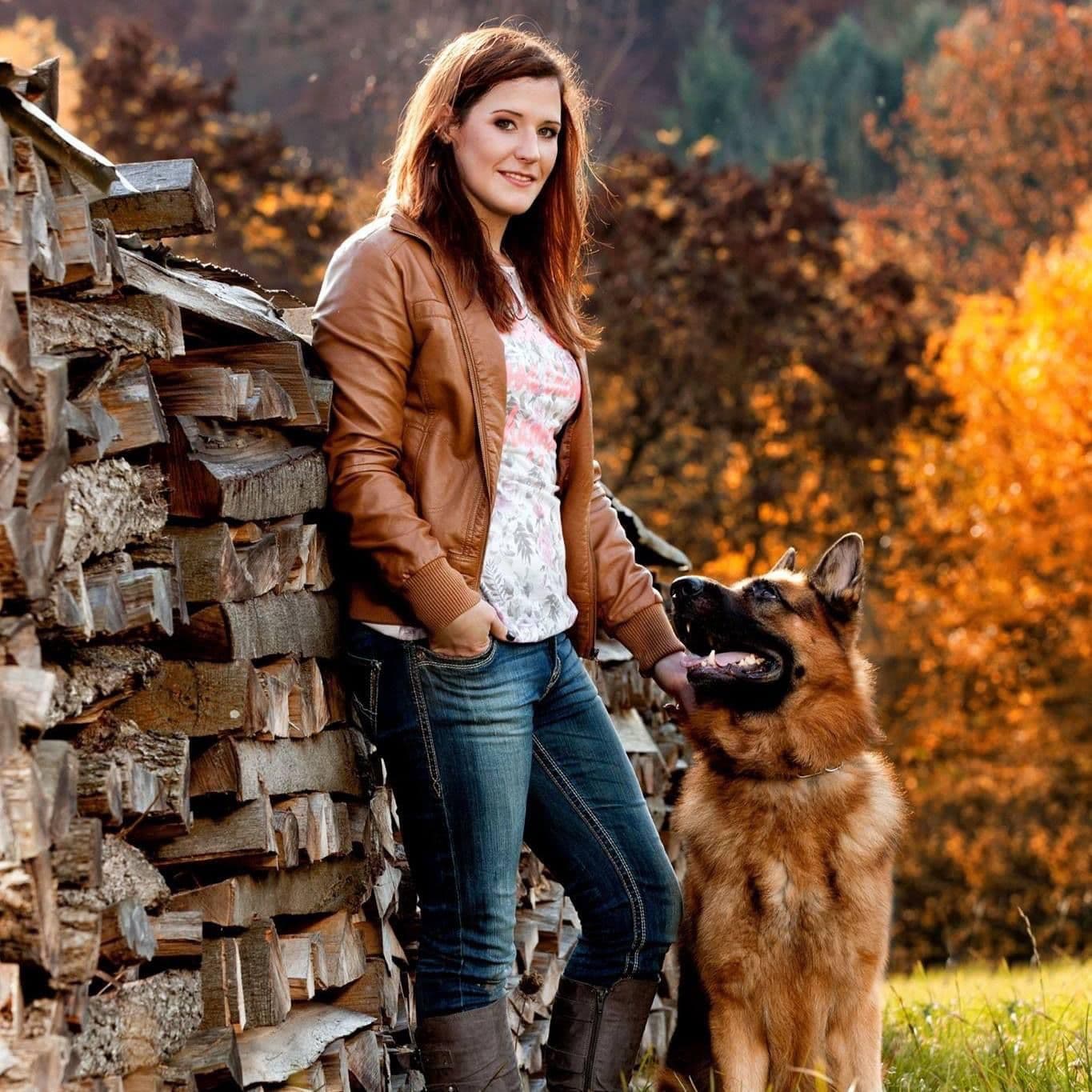
Handler and German Shepherd sharing a calm, bonded moment in an autumn setting — the result of relationship-first positive reinforcement training
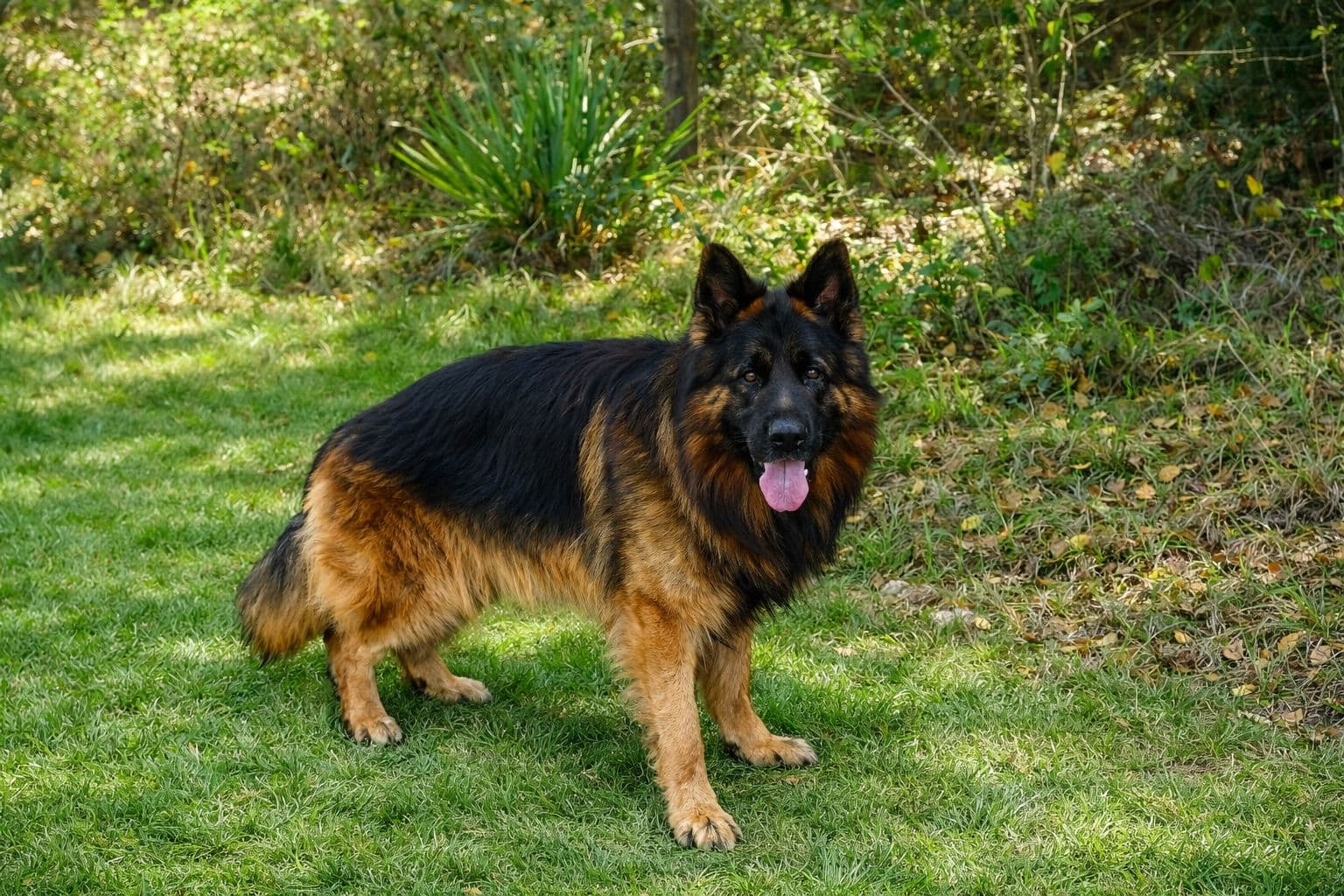
German Shepherd standing confidently on a lawn — demonstrating the composure and stability that positive reinforcement training produces
Field Results

What a Positively Trained K9 Looks Like in the Field

The proof is in observable behavior. A German Shepherd developed through consistent positive reinforcement will show specific hallmarks: it checks in frequently with its handler during off-leash work, it recovers quickly after surprises or distractions, and it maintains trained behaviors under elevated arousal states — such as during protection scenarios — without becoming erratic or over-threshold.

These dogs also display what trainers call "confident default behaviors" — when uncertain, they default to trained positions (sit, down, heel) rather than acting independently out of stress. That is a direct outcome of an operant conditioning history where the trained behavior reliably produced good outcomes.

Ultimately, the goal of K9 training is not obedience for its own sake — it is producing a dog that is safe, reliable, and a genuine partner to its handler. Force-free, science-based methods are simply the most efficient and ethical path to that outcome. And for German Shepherds, with their intelligence and drive, the results speak for themselves.

The Bottom Line

Positive reinforcement is not a soft approach — it is the most scientifically supported method for producing reliable, stable, and confident K9 German Shepherds. Force creates compliance. Reinforcement creates partnership. And partnership is what makes an exceptional working dog.

TagsPositive ReinforcementK9 TrainingOperant ConditioningGerman ShepherdForce-Free TrainingTraining ScienceReward-Based TrainingHandler BondWorking DogsDog Behavior
Ready to Experience the Difference?

See Force-Free K9 Training in Action

At Falcon K9 Protection, every dog is developed through science-based, positive methods that build confidence, reliability, and a genuine partnership with the handler. Schedule a free consultation to learn more about our training approach.