
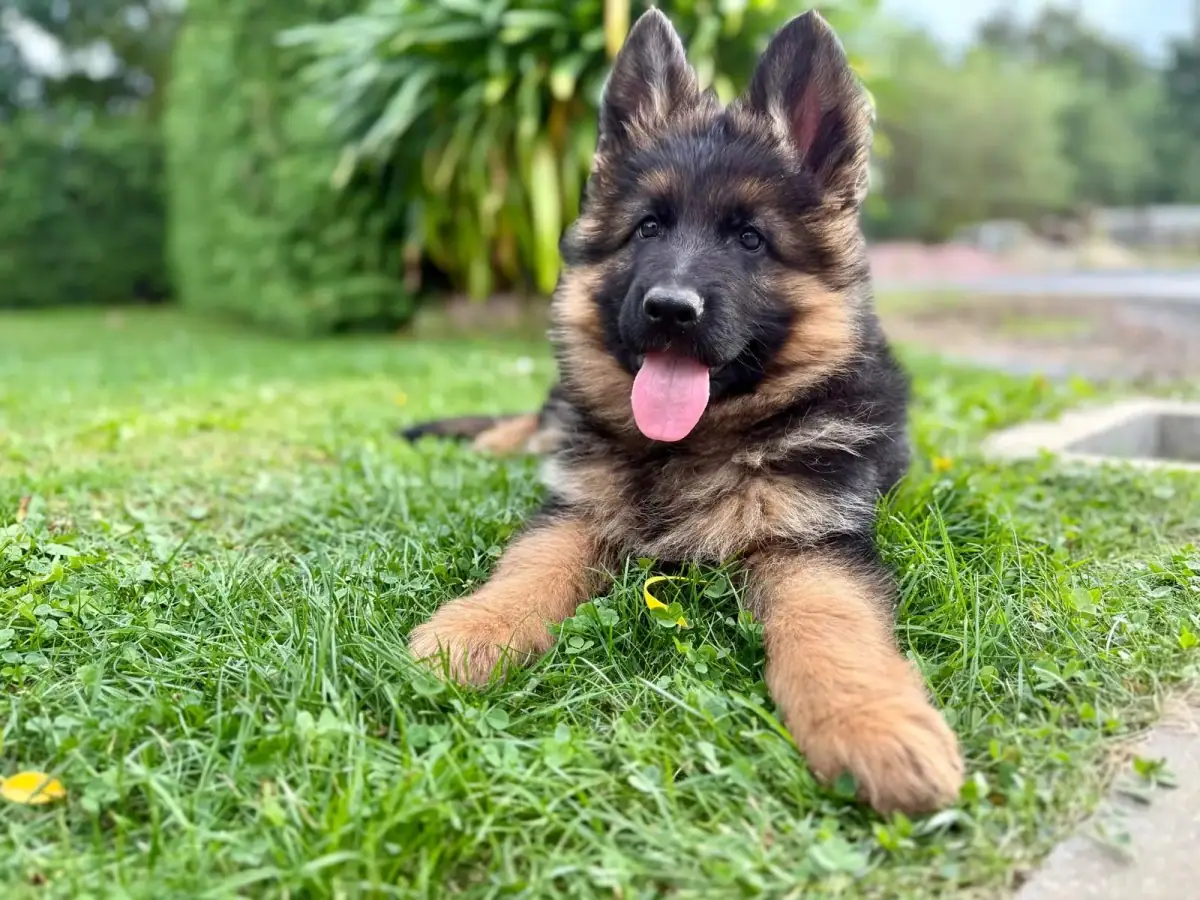

German Shepherd puppy lying on grass with bright eyes and tongue out
Buyer's Guide — Puppies

German Shepherd Puppies for Sale:
How to Evaluate a Good Pup

What every buyer should know before committing — from temperament testing to health certification, bloodlines, and the red flags that expose risky breeders.

May 20269 min readPuppies for Sale
What This Guide Covers

Finding the Right German Shepherd Puppy Starts With Knowing What to Look For

German Shepherd puppies are among the most popular dogs in the United States — and unfortunately, that popularity means the market is full of breeders who cut corners on health testing, prioritize volume over quality, and produce puppies with serious temperament or structural problems.

The difference between a great German Shepherd and a difficult one often comes down to decisions made before the puppy was ever born — the health testing of the parents, the bloodlines chosen, and the care taken during the first weeks of life. By the time a buyer sees a litter, much of the damage is already done or the quality is already locked in.

This guide gives you the tools to evaluate what you're looking at — so you can recognize quality when it's there, and walk away with confidence when it isn't.

Classic German Shepherd standing on green lawn — strong conformation and stable temperament
The Evaluation Framework

Six Things to Evaluate Before You Buy

Every quality puppy placement should check all six of these boxes. Missing even one should give you pause — especially when multiple are missing.

Temperament Assessment

Behavior & Character

A quality GSD puppy should be curious, approachable, and recover quickly from mild startle events. Avoid puppies that are excessively fearful, shut down, or unpredictably aggressive. Stable nerve is the single most important trait in any puppy — it determines trainability, adaptability, and long-term reliability.

Physical Soundness

Structure & Conformation

Evaluate the puppy's gait, bone structure, and overall proportions. Look for straight topline when moving, solid rear angulation, and feet that sit flat. Physical faults in puppies often predict orthopedic problems in adulthood — especially important in a breed susceptible to hip and elbow dysplasia.

Health Documentation

Certifications & Records

Ask for OFA or SV hip/elbow certifications on both parents, DNA verification, vaccination records, and a veterinary health certificate on the puppy. No reputable breeder will hesitate to share documentation. If health records are incomplete or the breeder is vague, that's a serious red flag.

Bloodline Verification

Pedigree & Registration

Request SV or AKC registration papers with a complete pedigree going back at least three generations. Evaluate whether the sire and dam have working titles (IPO/IGP, SchH), show ratings (V or VA), or other documented accomplishments. Pedigree reflects a puppy's genetic potential for temperament, health, and ability.

Early Socialization History

Developmental Foundation

Ask what the breeder has done with the litter during the critical socialization window (weeks 3–12). Quality breeders expose puppies to sounds, surfaces, people, and novel objects from day one. A puppy raised in a sterile kennel environment with no human interaction will struggle to adapt — and catch-up socialization is much harder than doing it right the first time.

Breeder Knowledge & Transparency

Vetting the Source

A quality breeder can discuss bloodlines in depth, explain their health testing protocols, share references from past buyers, and tell you exactly what their program does to develop puppies before placement. If a breeder deflects specific questions or pressures you to decide quickly, walk away.

The Most Important Factor

Temperament Is Everything

Structure can be managed. Health problems can be treated. But temperament — the underlying nerve, drive, and character of a dog — is largely genetic and largely fixed by the time a puppy leaves the breeder. This is where most buyers make the critical mistake of choosing based on looks rather than character.

When evaluating a puppy's temperament, look for three things: curiosity (the puppy approaches novel objects rather than retreating), nerve stability (the puppy recovers quickly after a mild startle or sudden noise), and handler affinity (the puppy engages with and follows a human).

These traits are directly inherited from the parents and shaped by early socialization. If you can observe both parents, do so — their temperament tells you more about the puppies than any individual puppy interaction can.

Puppy approaches strangers with curiosity, not fear
Recovers within seconds of a surprising noise or object
Engages with toys, follows handler focus
No excessive growling or snapping when handled
Comfortable being lifted and held briefly
Active and engaged — not lethargic or shut down
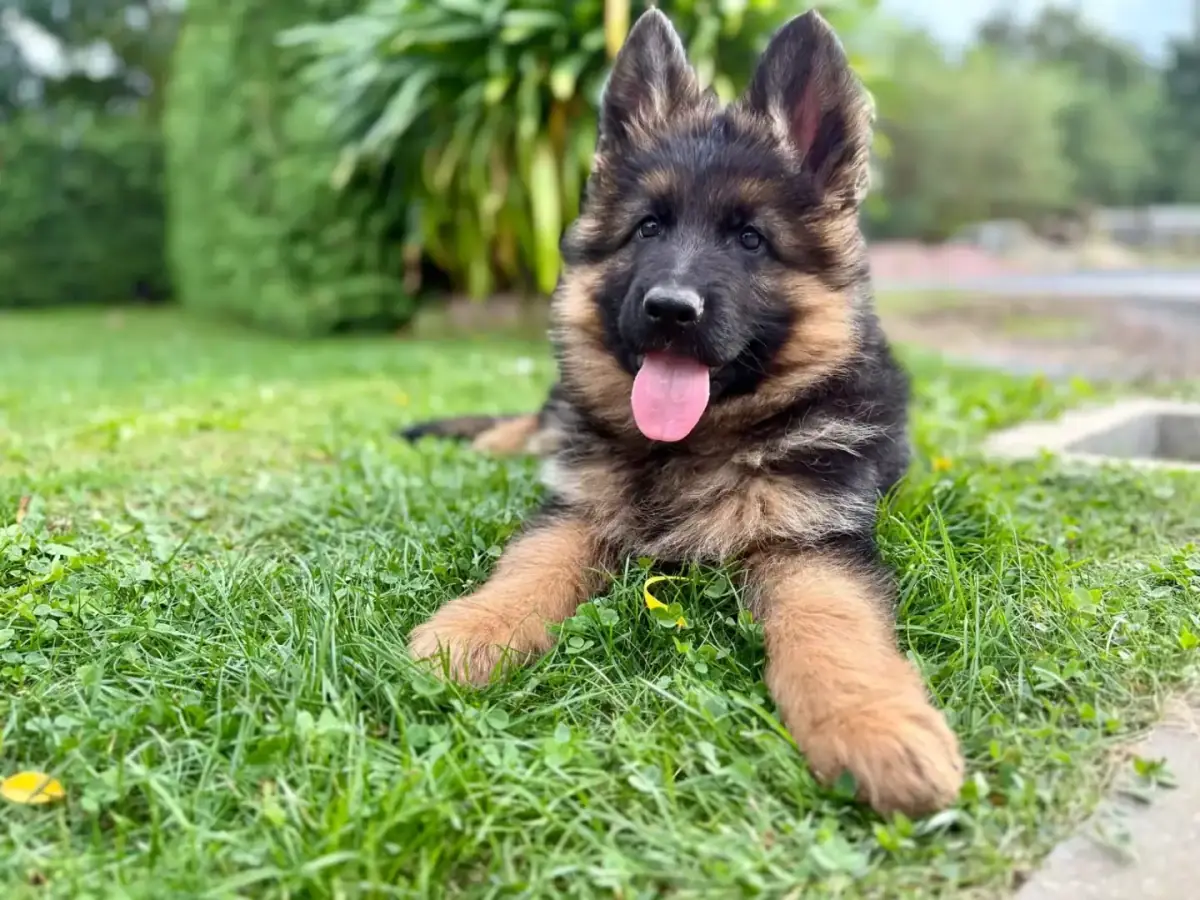
German Shepherd puppy lying on grass — bright eyes, alert expression, and stable temperament
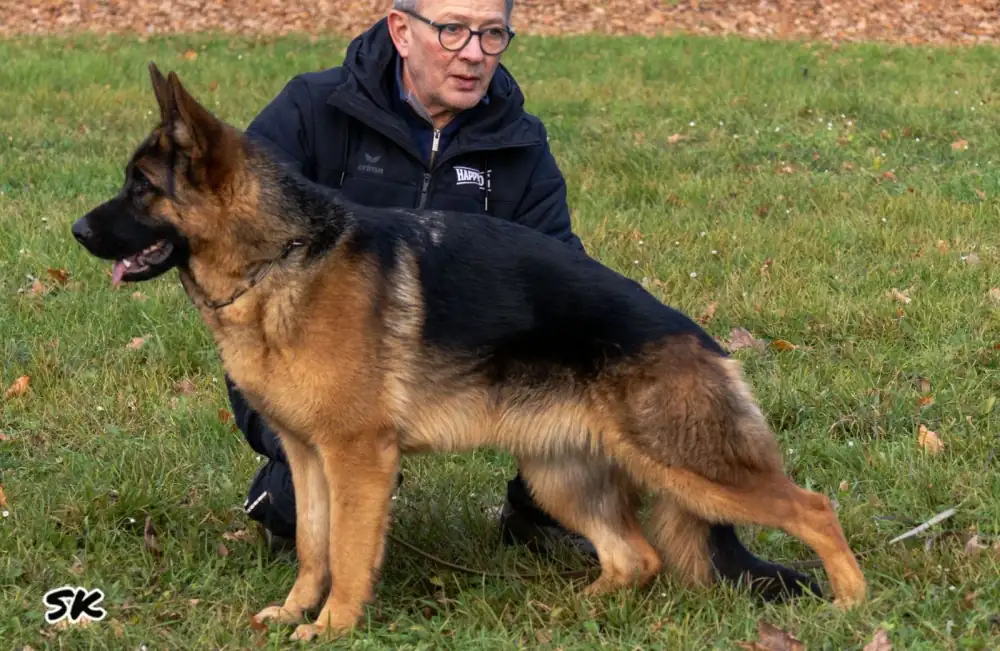
German Shepherd in show conformation stance with professional handler — VA-rated bloodlines
Choosing the Right Type

Working Line vs. Show Line: Which Puppy Is Right for You?

German Shepherds divide into two primary types based on breeding objective — and understanding the difference is essential before you buy. Working line puppies are bred for drive, athleticism, and working capability. They carry higher prey and defense drive, are more energetic, and excel in IGP/Schutzhund sport, personal protection, police and military work, and active family environments where they can be channeled through training.

Show line puppies are bred to the breed standard with an emphasis on classic conformation, movement, and a more moderate, family-friendly temperament. They make outstanding family companions, therapy dogs, and household protectors — without the high-intensity drive requirements of working line dogs.

Neither type is better — the question is which type matches your lifestyle. Mismatching a high-drive working dog to a low-activity household is one of the most common causes of behavioral problems in the breed.

Working Line

  • High drive & energy
  • Built for sport & protection
  • Requires structured work
  • Active lifestyles

Show Line

  • Classic conformation
  • Family-friendly temperament
  • Calmer energy level
  • Excellent companions
Health Verification

What Complete Health Documentation Looks Like

German Shepherds are genetically prone to hip and elbow dysplasia — conditions that can cause lifelong pain, reduced mobility, and significant veterinary costs. Responsible breeders test every breeding pair before ever producing a litter. Ask for these documents before committing to any puppy.

At minimum, a responsible breeder should provide: OFA (Orthopedic Foundation for Animals) or SV hip and elbow certification on both parents, DNA-verified parentage, a current veterinary health certificate on the puppy, age-appropriate vaccination records, and SV or AKC registration papers with a complete three-generation pedigree.

OFA or SV hip certification — HD clear or a/a rating on both parents
Elbow certification — ED clear on both parents
DNA-verified parentage (prevents misrepresentation of sire/dam)
Puppy veterinary health exam certificate
Vaccination and deworming records
SV (Schäferhund Verein) or AKC registration papers
Three-generation pedigree with titles and ratings
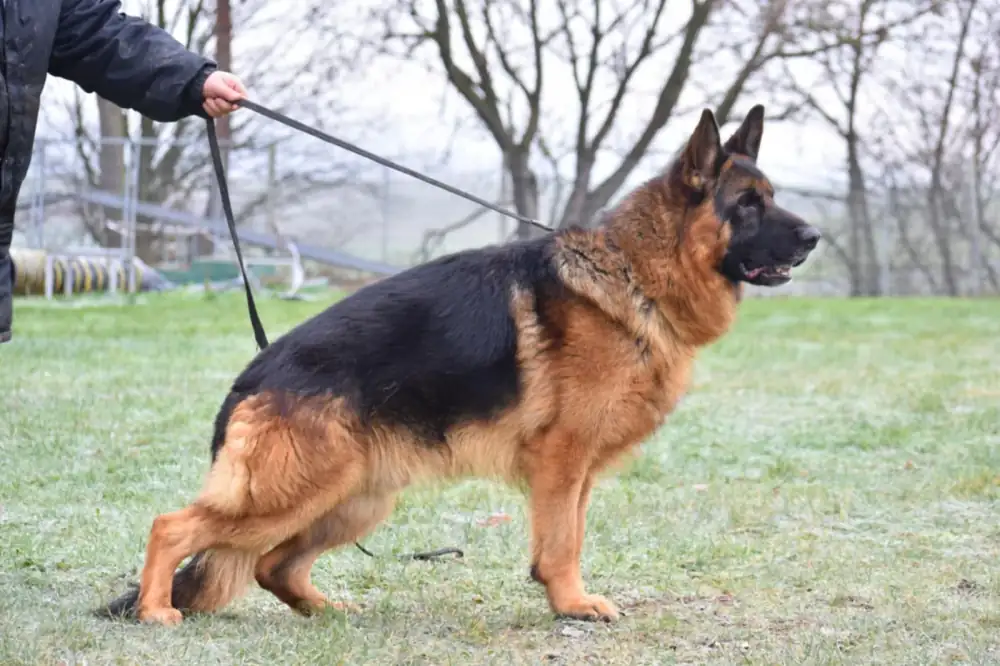
German Shepherd on leash demonstrating correct structure and conformation at a professional evaluation
Warning Signs

Red Flags Every Buyer Should Know

The German Shepherd market is full of high-volume operations that produce puppies without the testing or standards that protect buyers. These are the warning signs.

No health certifications on parents (OFA/SV hip and elbow scores)

Breeder refuses to show pedigree documentation or registration papers

Puppies available at 6 weeks or younger

Pressure to buy immediately — "only one left" sales tactics

Excessive fear, shutdown behavior, or unprovoked aggression in the puppy

No socialization history or puppies raised only in outdoor kennels

No titles, working certifications, or show ratings on parents

Prices that seem too good to be true — quality comes at a cost

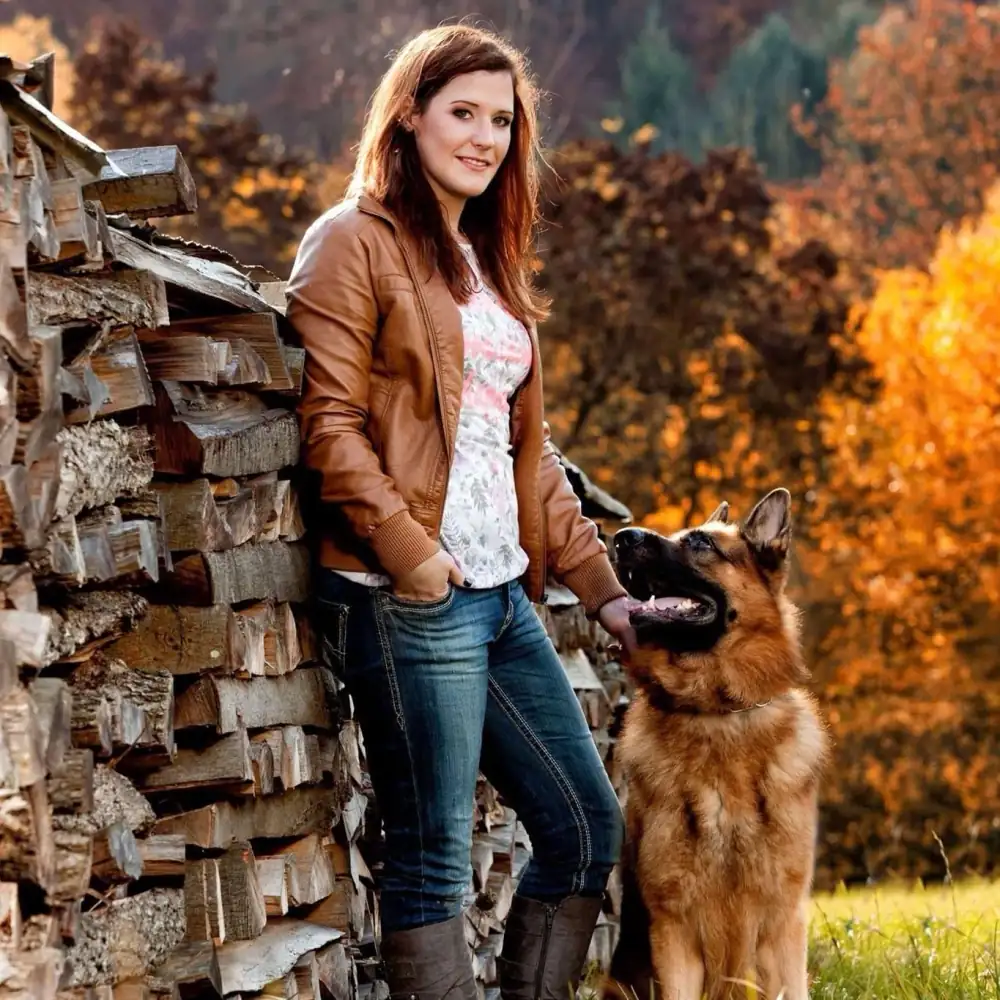
Young woman with German Shepherd companion in autumn — loyal, bonded, family-friendly
German Shepherd sitting alert on beach — confident and stable in any environment
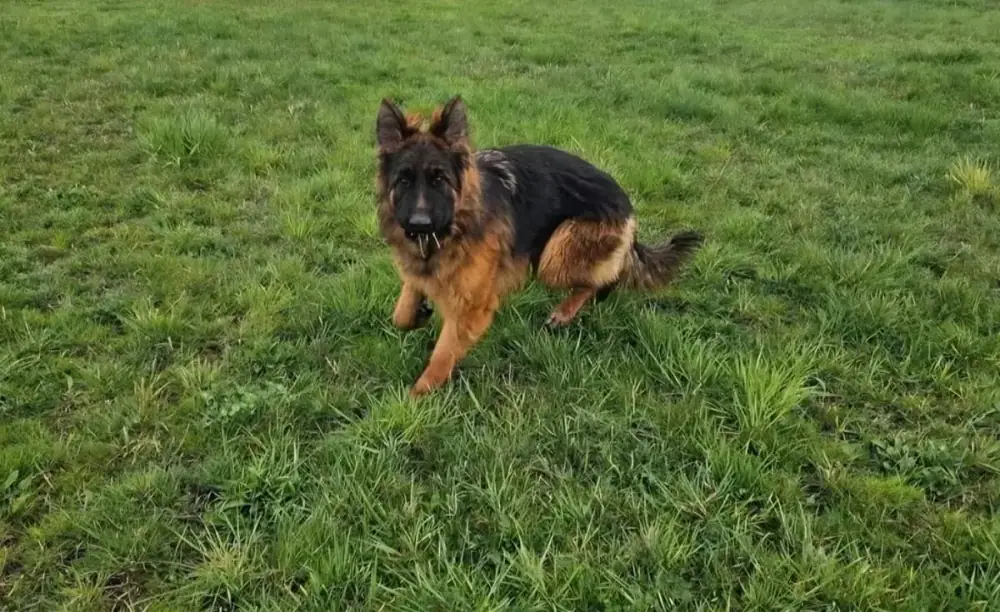
Young German Shepherd running freely on grass — athletic, healthy, and energetic
Life With a GSD

A Quality Puppy Grows Into a Lifelong Companion

The German Shepherd's reputation as the world's most versatile working dog is well-earned — but what draws most families to the breed is something simpler: an extraordinary depth of loyalty, intelligence, and presence that few other dogs can match.

A properly bred and socialized German Shepherd will adapt to your environment with confidence — whether that's a busy household with children, an active outdoor lifestyle, or a job that requires real working capability. The key is that quality starts at birth and is shaped through the first weeks of life.

When you invest in a puppy from a breeder who has done everything right — the health testing, the socialization, the bloodline selection, the early development — you get a dog that will repay that investment many times over in reliability, trainability, and companionship over its entire life.

View Available Puppies

German Shepherd Puppies for Sale: The Complete Buyer's Overview

Finding German Shepherd puppies for sale is easy. Finding a good one requires knowing what to look for. The GSD market ranges from world-class programs with decade-long waiting lists to high-volume operations producing puppies with no health testing and little socialization. The gap in outcomes between these extremes is enormous — and it often doesn't show up until the puppy is 12 to 18 months old.

Why German Shepherd Puppy Quality Varies So Widely

Unlike many breeds, the German Shepherd has been bred for specific working purposes for well over a century. The German Shepherd Dog Club (SV in Germany) maintains one of the most rigorous breed standards in the world — requiring hip and elbow certification, demonstrated working ability, and temperament evaluation before any dog can be approved for breeding. Puppies from these standards carry predictable, verifiable genetics.

American commercial breeders are under no such requirements. The result: an enormous number of GSD puppies sold every year with no health testing, unknown temperament genetics, and no working ability history in the bloodline. These dogs can make fine pets — but buyers are gambling, not making an informed decision.

The True Cost of Skipping Health Testing

Hip and elbow dysplasia in German Shepherds is strongly genetic. OFA data consistently shows that dogs bred from two HD-clear parents have significantly lower rates of dysplasia than those bred from untested parents. A puppy purchased from untested parents may develop hip dysplasia requiring surgical intervention costing $5,000–$10,000 per hip — a cost that far exceeds the price difference between a tested and untested program.

At Falcon K9 Protection

Every German Shepherd puppy we place comes from parents with verified HD/ED-clear status, SV registration, and demonstrated working or show ability. Our puppies are socialized from birth, temperament-evaluated before placement, and supported by our team for the life of the dog. If you're looking for German Shepherd puppies for sale and want to do it right, call us at (561) 921-7232 or view our available litters.

Ready to Find Your Puppy?

German Shepherd Puppies From a Breeder Who Does It Right

Every Falcon K9 puppy comes from HD/ED-clear parents, SV-registered bloodlines, and a structured socialization program. Call us today to check availability or ask about upcoming litters.