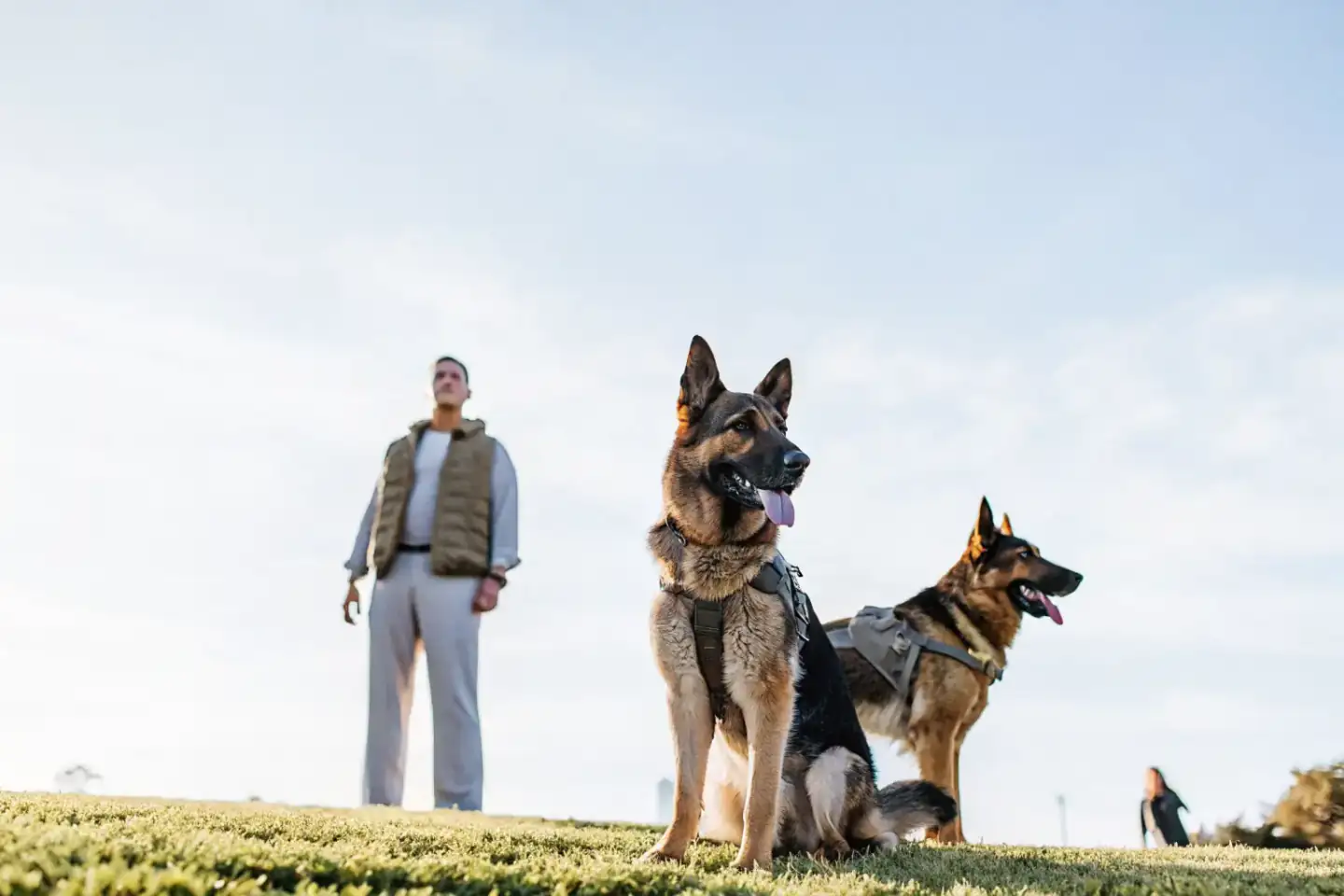
Perros de Protección vs Perros Familiares
¿Puede un perro servir como compañero familiar leal y perro de protección capaz? Aprenda a encontrar el equilibrio correcto.
Quick Summary
Family companion German Shepherds are bred for stability, social confidence, and gentle adaptability. Protection German Shepherds are selected for drive, nerve strength, and controlled protective instincts. The right choice depends on your lifestyle, experience level, and what you actually need from your dog — not on which type sounds more impressive.
Understanding the Fundamental Distinction
The difference between a family companion and a protection dog begins long before training — it starts in the breeding program. Family companions are selected for emotional stability, low reactivity, and the ability to integrate seamlessly into busy household environments.
Protection dogs, by contrast, are evaluated for drive intensity, confidence under pressure, and the mental fortitude to perform reliably when tested. These dogs undergo rigorous screening where fewer than 1 in 80 candidates successfully qualify for elite protection work.
Both types can make extraordinary companions — but only when properly matched to the right home and handler.
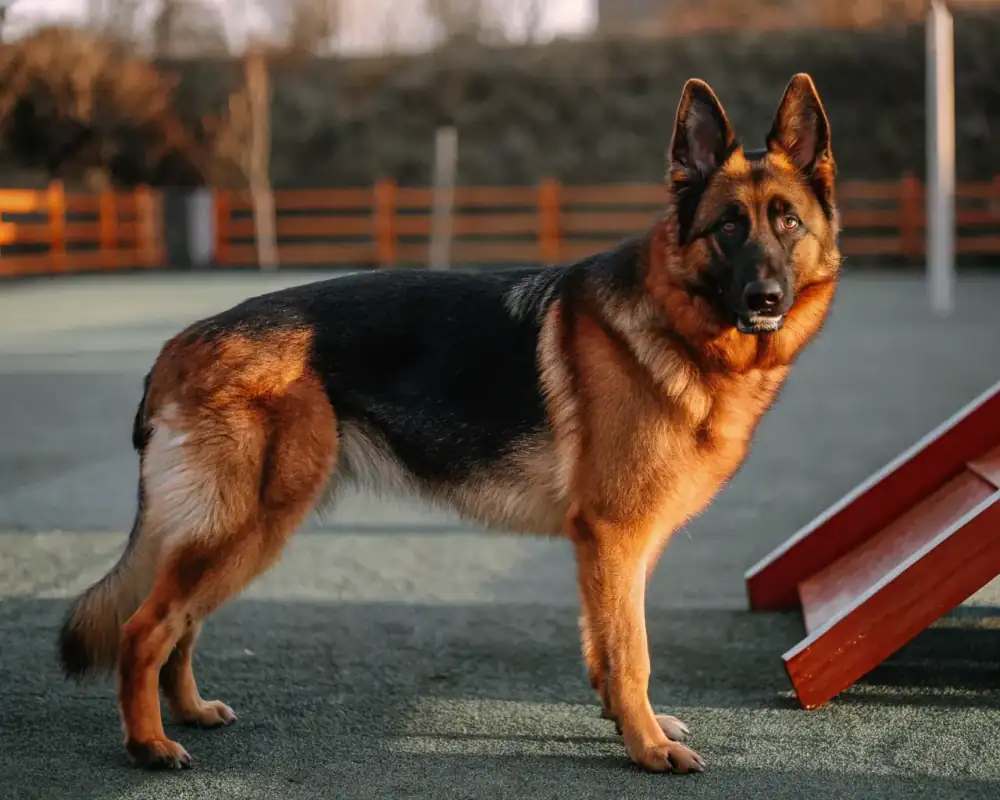
Protection Dog vs Family Companion
Understanding the defining characteristics of each type helps you make an informed decision for your household.
Family Companion German Shepherd
Bred for stability, social ease, and household integration
- Balanced, predictable energy levels
- High social confidence around strangers
- Gentle and patient with children
- Adapts quickly to daily routines and new environments
- Lower reactive threshold — calm under normal stressors
- Ideal for families, first-time dog owners, and active households
Protection German Shepherd
Selected for drive, nerve strength, and controlled protective instincts
- Strong nerve and unshakeable confidence under pressure
- Controlled protective instincts — on/off switch reliability
- High responsiveness and precision to handler commands
- Ability to perform reliably in high-stress or threatening situations
- Rigorous selection: fewer than 1 in 80 dogs qualify
- Best suited for experienced handlers or security-focused households
Can One Dog Do Both?
Yes — but only with professional evaluation. A well-bred family protection dog combines emotional stability with controlled drive. These dogs integrate naturally into family life, interact safely with children, and still perform reliably when protection is needed.
Achieving this balance requires careful selection from proven bloodlines, comprehensive temperament testing, and ongoing training under qualified guidance. It is not a matter of picking any strong-looking dog and hoping for the best.
Key insight:
The most dangerous mistake buyers make is acquiring a high-drive protection dog without the experience or support structure to manage it safely. Equally, families that need genuine security sometimes settle for a companion dog that will not perform when it matters most. Professional matching eliminates both risks.
Why Temperament and Matching Matter
Temperament remains the single most important factor — above pedigree, appearance, or price. Here is what to assess before committing to any dog.
Environmental Stability
Does the dog remain calm and composed in unfamiliar settings, around loud noises, or crowded environments?
Stress Reactions
How does the dog respond to unexpected pressure? Recovery speed and composure reveal true nerve quality.
Handler Engagement
Does the dog engage readily with its handler? Strong handler focus indicates trainability and long-term reliability.
Overall Balance
The ideal dog is neither overly submissive nor uncontrollably dominant — balanced temperament is the foundation of everything.
The Role of Bloodlines and Origin
Where a dog comes from matters as much as how it has been trained. German Shepherds imported from regulated European breeding programs — particularly those with documented SchH/IGP sport titles, FCI pedigrees, and multi-generational health clearances — offer substantially more predictable behavior and performance outcomes.
American-bred German Shepherds vary significantly in working ability and temperament consistency. Without documented sport titles and regulated health testing, selecting a quality working or family dog becomes considerably more difficult and unreliable.
At Falcon K9 Protection, we source only from proven European bloodlines with transparent pedigrees, health certifications, and verified temperament evaluations — so you know exactly what you are bringing into your home.
Choosing the Right Dog for Your Lifestyle
Choose a Family Companion If...
- You have young children or other pets at home
- You want a loyal, social dog without intensive ongoing training requirements
- This is your first or second working-breed dog
- Your primary goal is companionship, not active security work
- You live in a busy, social household with frequent visitors
Choose a Protection Dog If...
- You have experience handling high-drive working breeds
- You have a genuine security need — personal, property, or family protection
- You are prepared to invest in ongoing training and handler development
- Your household can manage a higher-energy, highly responsive dog
- You want a dog that reliably performs under stress, not just at home
There Is No Objectively Better Choice — Only the Right Match
Neither protection dogs nor family companions are objectively superior. The right German Shepherd is the one that aligns with your lifestyle, your experience level, and what you genuinely need from a dog. A mismatched dog — no matter how well-bred — creates problems for both the owner and the animal.
At Falcon K9 Protection, every placement begins with a thorough consultation to understand your household and goals before recommending a single dog. Our job is to find the right match — not to sell you the most expensive one.
Not Sure Which Type Is Right for You?
Our team at Falcon K9 Protection has helped hundreds of families and professionals find the right German Shepherd. Contact us to start the conversation.